Women's Health Check in Australia: Preventative Screening

April 8, 2026
Dr. Stephanie Bishop
Preventative Medicine & Gut Health Doctor | MBBS (Hons)
Women's Health Check in Australia: Preventative Screening

Women's health needs are dynamic and complex. Often, a brief consultation isn't enough time to fully explore the underlying factors behind fatigue, weight changes, or cognitive shifts.

At Everlab, we provide an in-depth, clinical-grade dive into female physiology. Our advanced women's health checks are designed to support you from your reproductive years through the transitions of perimenopause and postmenopause.

By replacing uncertainty with comprehensive biomarker data, we help you understand your biological trends, support your long-term health, and ensure you feel heard and actively supported at every life stage.

What does a comprehensive women's health check include?

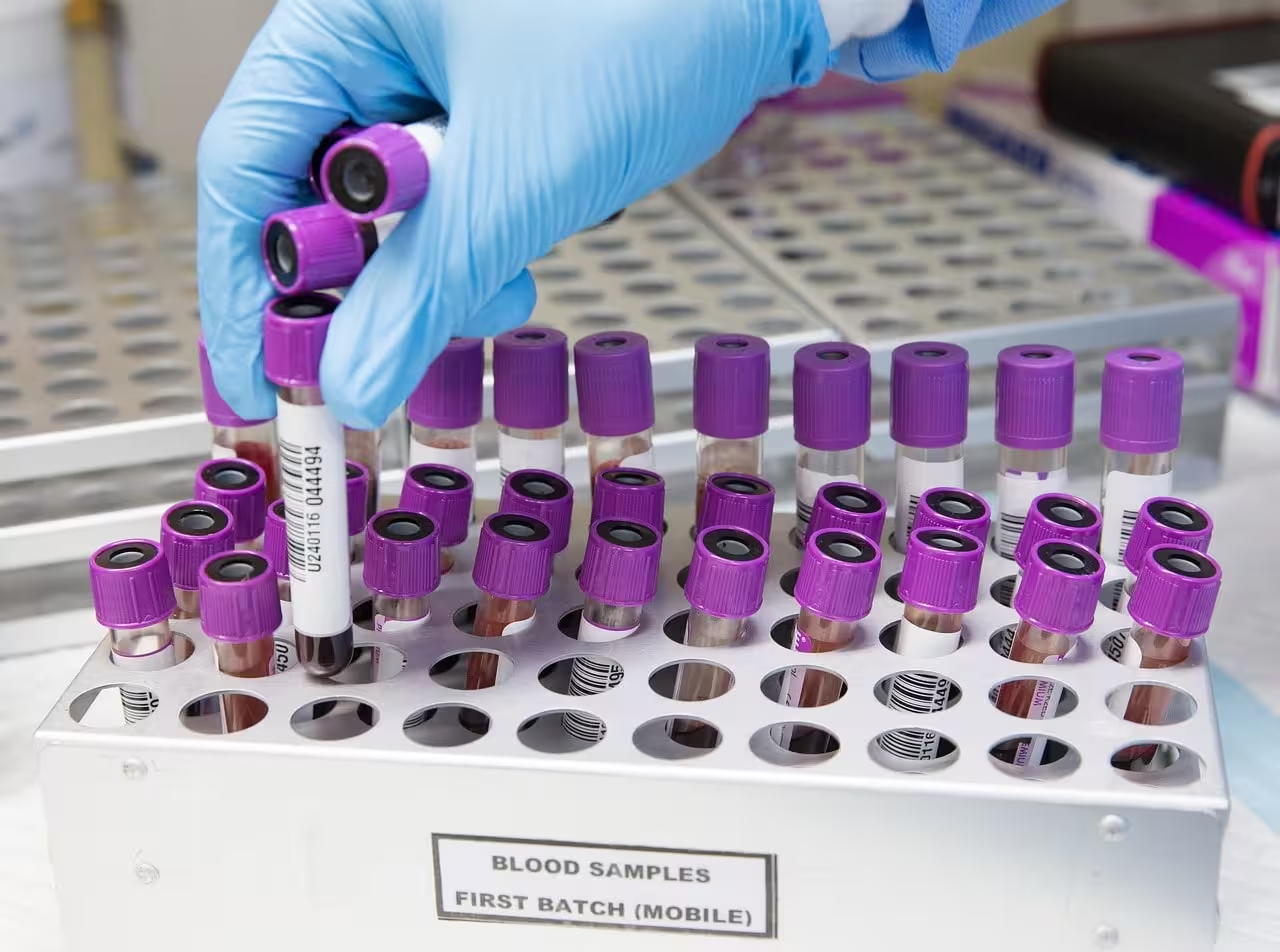
An Everlab women's health check measures specific biomarkers that are key to daily performance and long-term health:

  • Hormonal health: We measure oestrogen, progesterone, FSH, LH, and testosterone. This view is helpful for mapping menstrual cycle health, navigating perimenopausal transitions, and understanding shifts in energy or libido.
  • Comprehensive Thyroid Panel: We look closely at TSH (Thyroid Stimulating Hormone), free T3, free T4, and thyroid antibodies. Thyroid function can be a hidden driver of unexplained fatigue and metabolic changes.
  • Cardiovascular health: We test advanced lipid panels, including ApoB. A woman's cardiovascular risk profile changes post-menopause as oestrogen levels decline, making proactive screening important.
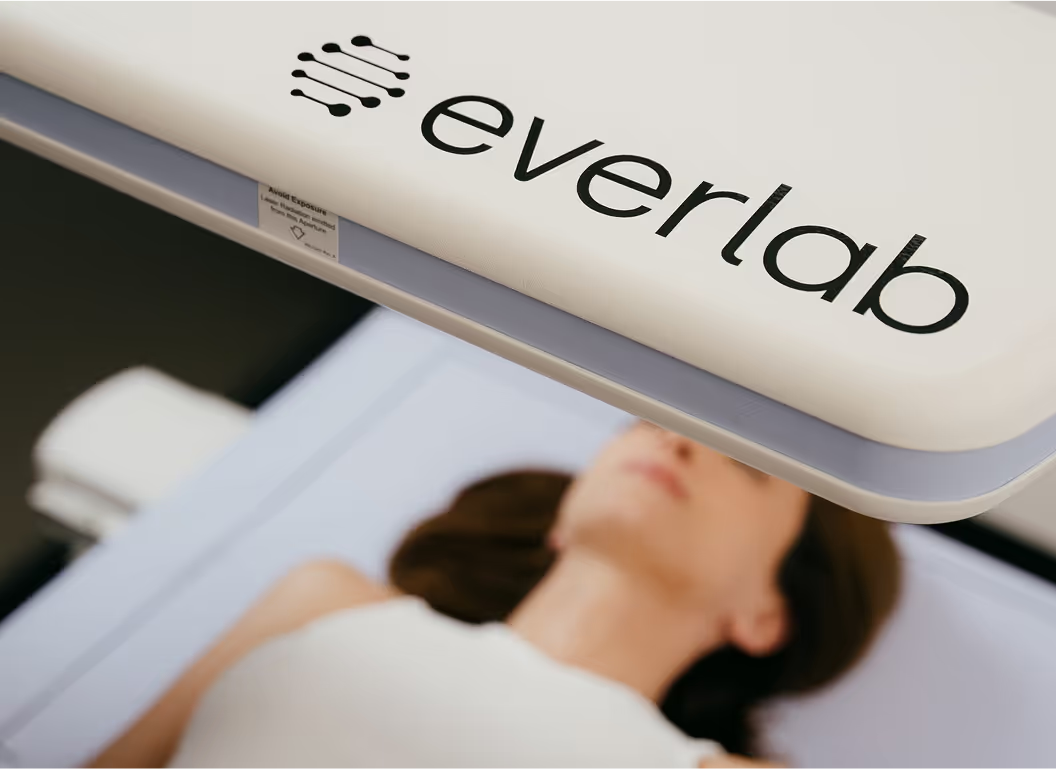
  • Bone health: Where clinically indicated, we use DEXA scanning to measure bone mineral density (BMD) to assess the risk of osteopenia or osteoporosis, alongside measuring visceral fat.
  • Nutritional status: We test iron studies (including ferritin), Vitamin D, and Vitamin B12. Low levels in these areas are common and frequently overlap with the symptoms of hormonal imbalances.

Everlab Insight: Hormones fluctuate naturally, but chronic symptoms like deep fatigue or sleep disruption deserve a thorough investigation. We use data to help you aim for your best health at every stage.

The importance of comprehensive screening for women

Standard reference ranges can be broad. Proactive, comprehensive screening allows for a more nuanced understanding of your health:

Navigating perimenopause: The decade leading up to menopause is characterised by significant hormonal shifts. Establishing baseline testing helps map this transition and can help inform clinical decisions regarding symptom management.

Cardiovascular risk: Heart disease is a leading cause of death for Australian women. Because risk profiles can change after menopause, early intervention and advanced screening are vital components of a long-term health strategy.

Protecting bone density: Significant bone density loss can occur in the years immediately following menopause. Early DEXA screening allows for intervention before fractures occur.

Validating your health journey: Many women seek a deeper understanding of their health even when standard results fall within "normal" ranges. Our panels look at your data contextually to support thriving health.

Understanding your health metrics

Because female reference ranges vary based on cycle timing and life stage, Everlab doctors interpret your data with your specific context in mind.

Critical metrics we track:

Metric Healthy Range (Female) Why It Matters
Ferritin (Iron Stores) 30–300 ng/mL Measures iron reserves. Low ferritin is a common driver of fatigue and brain fog.
TSH (Thyroid Hormone) 0.4–4.0 mU/L A primary regulator of metabolism.
ApoB (Apolipoprotein B) < 0.8 g/L A highly accurate marker for heart disease risk, which can rise post-menopause.
HbA1c < 5.7% Measures average blood glucose; a key predictor of metabolic health.
Bone Mineral Density Reviewed individually A T-score of -1 to -2.5 indicates osteopenia; < -2.5 indicates osteoporosis.

Everlab Insight: A ferritin level at the very low end of a "normal" range may still be associated with symptoms of iron deficiency in some women. We look at your results through the lens of your symptoms and performance goals.

How often should women get a health check?

Baseline: We suggest women in their late 20s or 30s establish healthy hormonal and metabolic baselines before the perimenopause transition begins.

Perimenopause (Typically 40s): Annual comprehensive testing is often recommended to track hormonal transitions and monitor thyroid function.

Post-menopause (50+): Annual reviews with a specific focus on cardiovascular markers (like ApoB), bone density (DEXA), and metabolic health.

How much does a women's health check cost in Australia?

The cost of preventative care in Australia varies:

  • Standard GP visit: While often covered by Medicare, testing is generally focused on diagnosing specific, symptomatic illnesses.
  • Specialist / Endocrinologist: Typically ranges from $250 to $500+ per consultation and usually requires a GP referral.
  • Everlab Women's Health Check: [Insert Everlab pricing/membership link] — Our program includes extensive blood panels, clinical diagnostics (like DEXA), a detailed review with a longevity-trained doctor, and a personalised health protocol.

(Note: Certain pathology or imaging may be eligible for Medicare rebates depending on your clinical indications and the discretion of the treating doctor.)

How to book a women's health check with Everlab

  1. Book online: Contact the Everlab clinical team to start.
  2. Timing your test: Our team will advise on the optimal day of your cycle for the most accurate hormone mapping.
  3. Complete your testing: Visit a partner clinic for pathology and diagnostic scans.
  4. Consult your doctor: Meet with an Everlab doctor via telehealth for an in-depth review.
  5. Receive your protocol: You will receive a personalised health and longevity program tailored to your biology.

[ Book your women's health check with Everlab → ]

Frequently Asked Questions

1. Does this replace my cervical screening or mammogram?

No. Everlab focuses on blood biomarkers, metabolic function, and body composition. You should continue to see your GP for routine cancer screenings, such as cervical smears and mammograms.

2. Should I test my hormones if I am on the contraceptive pill?

The contraceptive pill suppresses natural hormone production. Testing while on the pill primarily reflects the medication's effect. However, we still test vital markers like thyroid function, metabolic health, and nutritional status.

3. Do you prescribe HRT (Hormone Replacement Therapy)?

Our doctors are experienced in hormonal health and the complexities of perimenopause. Depending on your clinical results and symptoms, HRT may be discussed and prescribed as part of your personalised program if deemed appropriate.

Dr. Stephanie Bishop
Preventative Medicine & Gut Health Doctor | MBBS (Hons)

Clinician, medical educator, and med-tech developer with 16+ years of clinical experience and 25+ years in the health industry. Passionate about proactive longevity, preventative health, and optimising health outcomes through innovative, integrated, and holistic approaches. Experienced across rural emergency medicine, motorsport medicine, and longevity-focused care, with a research background in gastrointestinal health and a first-author publication. Dedicated to enhancing well-being, healthspan, and lifespan through evidence-based, forward-thinking healthcare solutions.

Women's health needs are dynamic and complex. Often, a brief consultation isn't enough time to fully explore the underlying factors behind fatigue, weight changes, or cognitive shifts.

At Everlab, we provide an in-depth, clinical-grade dive into female physiology. Our advanced women's health checks are designed to support you from your reproductive years through the transitions of perimenopause and postmenopause.

By replacing uncertainty with comprehensive biomarker data, we help you understand your biological trends, support your long-term health, and ensure you feel heard and actively supported at every life stage.

What does a comprehensive women's health check include?

An Everlab women's health check measures specific biomarkers that are key to daily performance and long-term health:

  • Hormonal health: We measure oestrogen, progesterone, FSH, LH, and testosterone. This view is helpful for mapping menstrual cycle health, navigating perimenopausal transitions, and understanding shifts in energy or libido.
  • Comprehensive Thyroid Panel: We look closely at TSH (Thyroid Stimulating Hormone), free T3, free T4, and thyroid antibodies. Thyroid function can be a hidden driver of unexplained fatigue and metabolic changes.
  • Cardiovascular health: We test advanced lipid panels, including ApoB. A woman's cardiovascular risk profile changes post-menopause as oestrogen levels decline, making proactive screening important.
  • Bone health: Where clinically indicated, we use DEXA scanning to measure bone mineral density (BMD) to assess the risk of osteopenia or osteoporosis, alongside measuring visceral fat.
  • Nutritional status: We test iron studies (including ferritin), Vitamin D, and Vitamin B12. Low levels in these areas are common and frequently overlap with the symptoms of hormonal imbalances.

Everlab Insight: Hormones fluctuate naturally, but chronic symptoms like deep fatigue or sleep disruption deserve a thorough investigation. We use data to help you aim for your best health at every stage.

The importance of comprehensive screening for women

Standard reference ranges can be broad. Proactive, comprehensive screening allows for a more nuanced understanding of your health:

Navigating perimenopause: The decade leading up to menopause is characterised by significant hormonal shifts. Establishing baseline testing helps map this transition and can help inform clinical decisions regarding symptom management.

Cardiovascular risk: Heart disease is a leading cause of death for Australian women. Because risk profiles can change after menopause, early intervention and advanced screening are vital components of a long-term health strategy.

Protecting bone density: Significant bone density loss can occur in the years immediately following menopause. Early DEXA screening allows for intervention before fractures occur.

Validating your health journey: Many women seek a deeper understanding of their health even when standard results fall within "normal" ranges. Our panels look at your data contextually to support thriving health.

Understanding your health metrics

Because female reference ranges vary based on cycle timing and life stage, Everlab doctors interpret your data with your specific context in mind.

Critical metrics we track:

Metric Healthy Range (Female) Why It Matters
Ferritin (Iron Stores) 30–300 ng/mL Measures iron reserves. Low ferritin is a common driver of fatigue and brain fog.
TSH (Thyroid Hormone) 0.4–4.0 mU/L A primary regulator of metabolism.
ApoB (Apolipoprotein B) < 0.8 g/L A highly accurate marker for heart disease risk, which can rise post-menopause.
HbA1c < 5.7% Measures average blood glucose; a key predictor of metabolic health.
Bone Mineral Density Reviewed individually A T-score of -1 to -2.5 indicates osteopenia; < -2.5 indicates osteoporosis.

Everlab Insight: A ferritin level at the very low end of a "normal" range may still be associated with symptoms of iron deficiency in some women. We look at your results through the lens of your symptoms and performance goals.

How often should women get a health check?

Baseline: We suggest women in their late 20s or 30s establish healthy hormonal and metabolic baselines before the perimenopause transition begins.

Perimenopause (Typically 40s): Annual comprehensive testing is often recommended to track hormonal transitions and monitor thyroid function.

Post-menopause (50+): Annual reviews with a specific focus on cardiovascular markers (like ApoB), bone density (DEXA), and metabolic health.

How much does a women's health check cost in Australia?

The cost of preventative care in Australia varies:

  • Standard GP visit: While often covered by Medicare, testing is generally focused on diagnosing specific, symptomatic illnesses.
  • Specialist / Endocrinologist: Typically ranges from $250 to $500+ per consultation and usually requires a GP referral.
  • Everlab Women's Health Check: [Insert Everlab pricing/membership link] — Our program includes extensive blood panels, clinical diagnostics (like DEXA), a detailed review with a longevity-trained doctor, and a personalised health protocol.

(Note: Certain pathology or imaging may be eligible for Medicare rebates depending on your clinical indications and the discretion of the treating doctor.)

How to book a women's health check with Everlab

  1. Book online: Contact the Everlab clinical team to start.
  2. Timing your test: Our team will advise on the optimal day of your cycle for the most accurate hormone mapping.
  3. Complete your testing: Visit a partner clinic for pathology and diagnostic scans.
  4. Consult your doctor: Meet with an Everlab doctor via telehealth for an in-depth review.
  5. Receive your protocol: You will receive a personalised health and longevity program tailored to your biology.

[ Book your women's health check with Everlab → ]

Frequently Asked Questions

1. Does this replace my cervical screening or mammogram?

No. Everlab focuses on blood biomarkers, metabolic function, and body composition. You should continue to see your GP for routine cancer screenings, such as cervical smears and mammograms.

2. Should I test my hormones if I am on the contraceptive pill?

The contraceptive pill suppresses natural hormone production. Testing while on the pill primarily reflects the medication's effect. However, we still test vital markers like thyroid function, metabolic health, and nutritional status.

3. Do you prescribe HRT (Hormone Replacement Therapy)?

Our doctors are experienced in hormonal health and the complexities of perimenopause. Depending on your clinical results and symptoms, HRT may be discussed and prescribed as part of your personalised program if deemed appropriate.

Dr. Stephanie Bishop
Preventative Medicine & Gut Health Doctor | MBBS (Hons)

Clinician, medical educator, and med-tech developer with 16+ years of clinical experience and 25+ years in the health industry. Passionate about proactive longevity, preventative health, and optimising health outcomes through innovative, integrated, and holistic approaches. Experienced across rural emergency medicine, motorsport medicine, and longevity-focused care, with a research background in gastrointestinal health and a first-author publication. Dedicated to enhancing well-being, healthspan, and lifespan through evidence-based, forward-thinking healthcare solutions.

Future-proof your health.

Join 10,000+ Australians improving their health with proactive, personalised healthcare.
Book a Call

Related Articles

Ready to know your true fitness level?

Your VO₂ Max score is more than a number. It’s a predictor of your long-term health. Join thousands of Australians who’ve already discovered their real endurance potential.

Join today
Green star image
Rated 4.9/5 by Everlab Members
Tested with Clinical-Grade Accuracy
Supervised by Accredited Doctors
“As a triathlete, this test completely changed how I train. The insights are next-level.”
Daniel H., Sydney
Close-up of a young woman with black hair looking thoughtfully at someone.
Coronary
imaging
Advanced blood
biomarkers
3g Plant
sterols

Book a Free Discovery Call

Join 1000's of Australians improving their health with proactive, personalised healthcare.

Women's Health Check in Australia: Preventative Screening

Go beyond standard care with an advanced women's health check. We comprehensively test hormones, metabolic health, bone density, and cardiovascular risk. Book with Everlab.

Everlab - Australia’s leading personal longevity clinic.

Learn more
Need more info?
Book a call