


























The 4 Stages of Behaviour Change (And How to Make Healthy Habits Stick).

November 3, 2025
Dr. Steven Lu
Chief Medical Officer | MBBS (hons) | DCH FRACGP
The 4 Stages of Behaviour Change (And How to Make Healthy Habits Stick).

We love the idea of a fresh start.

The Monday reset. The New Year’s overhaul. The 30-day challenge. But the truth is — most lasting health changes don’t happen like that. They happen gradually, through stages. And the sooner we stop expecting ourselves to change everything overnight, the better our results will be.

From behavioural experts to trainers to dietitians, it's widely recognised that lasting change tends to happen in four stages. As you go through them, you'll probably realise they feel familiar.

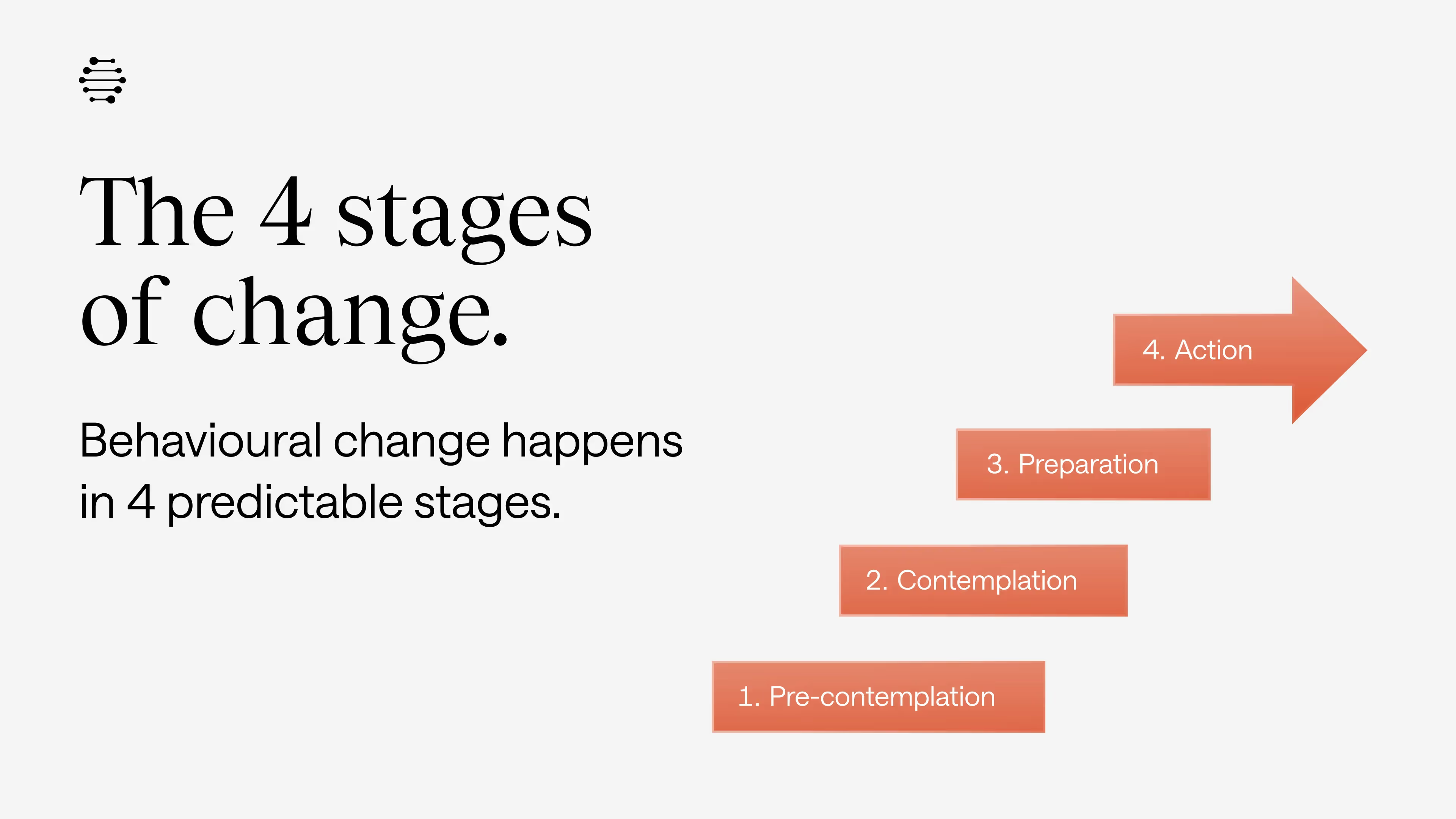
The 4 Stages of Change.

  • Pre-contemplation: “I’m fine.”
  • Contemplation: “Maybe I should…”
  • Preparation: “I’m ready.”
  • Action: “I’m doing it.”

Let’s walk through each stage and find out what they actually look like in real life.

Stage 1: “I’m fine.”

This is the “it’s probably nothing” phase.

You're not thinking about your sleep, your stress levels, your nutrition, or your blood pressure. Because nothing’s really wrong. You’re tired, but who isn’t? You haven’t exercised in weeks, but you’re busy. You’ve been putting off that check-up for months, but life gets in the way.

In this stage, you’re not being lazy. You’re just not there yet.

This is where most people start — and honestly, most of the population stays here unless something interrupts the pattern. A symptom. A friend’s diagnosis. A test result. Or just a creeping sense that something isn’t quite right.

Stage 2: “Maybe I should…”

You start to notice things.

You’re more tired in the morning than you used to be. You feel flat after meals. You're getting injured more easily, or your clothes don’t fit like they used to. You're not doing anything about it yet, but you’re thinking about it.

This stage is uncomfortable — because it brings up resistance. You know you could change something… but where do you even start? Do you really want to give up your nightly wine or start exercising again?

This is also the stage where people get stuck (sometimes for years) because they think change has to be drastic. That’s why education and exposure matters. A good article. A doctor who listens. A friend who shares their story. That’s often what tips people into the next phase.

Stage 3: “I’m ready.”

Now things are in motion.

You’ve started Googling programs. You’ve booked a blood test. You’re following people on Instagram who talk about healthy habits and actually make it feel doable. You’ve said no to the third drink a few times, and it felt good.

You might not be doing everything, but your mindset has shifted. You’re more aware. More intentional. You’re making room for change mentally, physically, and in your calendar.

For some people, this looks like a full overhaul. For others, it’s a few sticky notes on the fridge and a reminder to go for a walk after dinner. Either way, it’s progress.

Stage 4: “I’m doing it.”

You’re walking the walk.

You’re training consistently. You’re making better food choices. You’ve replaced plastic containers with glass ones. You’re sleeping better, recovering faster, and maybe even enjoying the process.

But let’s be honest — you’re not perfect. No one is.

This stage isn’t about never slipping up. It’s about sticking with it after you do. That’s what separates a short-term sprint from a long-term shift. You stop seeing relapses as failure, and start seeing them as part of the loop.

Because here’s the thing most people don’t tell you: You don’t move through these stages once. You cycle through them again and again, for different habits, different seasons, different goals.

So… where are you right now?

Not exercising, but thinking about it? Stage 2.
Trying to cut down alcohol, but still saying yes on the weekends? Stage 3.
Waking up early, moving your body, prioritising your health? Stage 4.

The point isn’t to judge yourself. Understanding these stages helps you understand yourself. Once you know where you are, you can focus on what’s actually helpful for that stage.

What you can do today.

Here’s the takeaway:

  • If you’re in Stage 1, start paying attention. As yourself what feels off. What’s been nagging at you?
  • If you’re in Stage 2, don’t pressure yourself to act yet. Just start learning, let yourself be curious and gather information.
  • If you’re in Stage 3, focus on structure. Make a plan, set a date and get support.
  • If you’re in Stage 4, don’t aim for perfection. Aim for consistency.

At Everlab, we don’t believe in crash changes or all-or-nothing plans. We believe in knowing where you are and building from there.

Dr. Steven Lu
Chief Medical Officer | MBBS (hons) | DCH FRACGP

Steven is a specialist general practitioner, preventative health consultant, medical educator, healthcare entrepreneur and co-founder of Everlab. With 15+ years of clinical experience, and driven by his passion for preventive care outcomes, Steven is dedicated to personalised and innovative approaches to enhance well-being, extend human lifespan, and improve healthspan.

We love the idea of a fresh start.

The Monday reset. The New Year’s overhaul. The 30-day challenge. But the truth is — most lasting health changes don’t happen like that. They happen gradually, through stages. And the sooner we stop expecting ourselves to change everything overnight, the better our results will be.

From behavioural experts to trainers to dietitians, it's widely recognised that lasting change tends to happen in four stages. As you go through them, you'll probably realise they feel familiar.

The 4 Stages of Change.

  • Pre-contemplation: “I’m fine.”
  • Contemplation: “Maybe I should…”
  • Preparation: “I’m ready.”
  • Action: “I’m doing it.”

Let’s walk through each stage and find out what they actually look like in real life.

Stage 1: “I’m fine.”

This is the “it’s probably nothing” phase.

You're not thinking about your sleep, your stress levels, your nutrition, or your blood pressure. Because nothing’s really wrong. You’re tired, but who isn’t? You haven’t exercised in weeks, but you’re busy. You’ve been putting off that check-up for months, but life gets in the way.

In this stage, you’re not being lazy. You’re just not there yet.

This is where most people start — and honestly, most of the population stays here unless something interrupts the pattern. A symptom. A friend’s diagnosis. A test result. Or just a creeping sense that something isn’t quite right.

Stage 2: “Maybe I should…”

You start to notice things.

You’re more tired in the morning than you used to be. You feel flat after meals. You're getting injured more easily, or your clothes don’t fit like they used to. You're not doing anything about it yet, but you’re thinking about it.

This stage is uncomfortable — because it brings up resistance. You know you could change something… but where do you even start? Do you really want to give up your nightly wine or start exercising again?

This is also the stage where people get stuck (sometimes for years) because they think change has to be drastic. That’s why education and exposure matters. A good article. A doctor who listens. A friend who shares their story. That’s often what tips people into the next phase.

Stage 3: “I’m ready.”

Now things are in motion.

You’ve started Googling programs. You’ve booked a blood test. You’re following people on Instagram who talk about healthy habits and actually make it feel doable. You’ve said no to the third drink a few times, and it felt good.

You might not be doing everything, but your mindset has shifted. You’re more aware. More intentional. You’re making room for change mentally, physically, and in your calendar.

For some people, this looks like a full overhaul. For others, it’s a few sticky notes on the fridge and a reminder to go for a walk after dinner. Either way, it’s progress.

Stage 4: “I’m doing it.”

You’re walking the walk.

You’re training consistently. You’re making better food choices. You’ve replaced plastic containers with glass ones. You’re sleeping better, recovering faster, and maybe even enjoying the process.

But let’s be honest — you’re not perfect. No one is.

This stage isn’t about never slipping up. It’s about sticking with it after you do. That’s what separates a short-term sprint from a long-term shift. You stop seeing relapses as failure, and start seeing them as part of the loop.

Because here’s the thing most people don’t tell you: You don’t move through these stages once. You cycle through them again and again, for different habits, different seasons, different goals.

So… where are you right now?

Not exercising, but thinking about it? Stage 2.
Trying to cut down alcohol, but still saying yes on the weekends? Stage 3.
Waking up early, moving your body, prioritising your health? Stage 4.

The point isn’t to judge yourself. Understanding these stages helps you understand yourself. Once you know where you are, you can focus on what’s actually helpful for that stage.

What you can do today.

Here’s the takeaway:

  • If you’re in Stage 1, start paying attention. As yourself what feels off. What’s been nagging at you?
  • If you’re in Stage 2, don’t pressure yourself to act yet. Just start learning, let yourself be curious and gather information.
  • If you’re in Stage 3, focus on structure. Make a plan, set a date and get support.
  • If you’re in Stage 4, don’t aim for perfection. Aim for consistency.

At Everlab, we don’t believe in crash changes or all-or-nothing plans. We believe in knowing where you are and building from there.

Dr. Steven Lu
Chief Medical Officer | MBBS (hons) | DCH FRACGP

Steven is a specialist general practitioner, preventative health consultant, medical educator, healthcare entrepreneur and co-founder of Everlab. With 15+ years of clinical experience, and driven by his passion for preventive care outcomes, Steven is dedicated to personalised and innovative approaches to enhance well-being, extend human lifespan, and improve healthspan.

Get the latest from Everlab

Sign up to receive our newsletter

Ready to know your true fitness level?

Your VO₂ Max score is more than a number. It’s a predictor of your long-term health. Join thousands of Australians who’ve already discovered their real endurance potential.

Join today
Green star image
Rated 4.9/5 by Everlab Members
Tested with Clinical-Grade Accuracy
Supervised by Accredited Doctors
“As a triathlete, this test completely changed how I train. The insights are next-level.”
Daniel H., Sydney

The 4 Stages of Behaviour Change (And How to Make Healthy Habits Stick).

Learn the 4 stages of behaviour change and how to build lasting health habits—without the all-or-nothing mindset or burnout.

Everlab - Australia’s leading personal longevity clinic.

Learn more