‍Female Hormone Test: A Complete Guide to Understanding Your Hormones

April 13, 2026
Dr. Stephanie Bishop
Preventative Medicine & Gut Health Doctor | MBBS (Hons)
‍Female Hormone Test: A Complete Guide to Understanding Your Hormones

Hormonal health affects everything from your energy and mood to your weight, fertility, and long-term wellbeing. Yet most women don't get their hormones properly tested until symptoms become impossible to ignore.

A female hormone test measures key markers like FSH, LH, oestradiol, progesterone, and testosterone to identify imbalances that may be driving irregular periods, fatigue, mood changes, or difficulty conceiving. At Everlab, we offer a full female hormone panel with doctor-reviewed results and clear, clinical insights.

If you have been putting up with symptoms or wondering whether something is "off," testing provides the data to help you move from uncertainty to informed management.

What is a female hormone test?

A female hormone test is a blood test that measures your reproductive and metabolic hormones. It typically includes:

  • FSH (Follicle-Stimulating Hormone): Regulates your menstrual cycle and egg production. Elevated FSH can signal declining ovarian function or perimenopause.
  • LH (Luteinising Hormone): Triggers ovulation. An elevated LH:FSH ratio (above 2:1) is one of the markers used to investigate PCOS.
  • Oestradiol (E2): The primary oestrogen. It plays a major role in bone health, mood regulation, and reproductive function.
  • Progesterone: Confirms whether ovulation has occurred. It is also critical for cycle regularity and maintaining early pregnancy.
  • Testosterone: Even in women, testosterone affects energy, libido, and muscle mass. Too much or too little can cause noticeable symptoms.
  • SHBG (Sex Hormone-Binding Globulin): This protein binds to hormones in the blood and affects how much free hormone is actually available for your body to use.

Timing matters. Some hormones need to be tested on specific days of your cycle for accurate results. FSH and oestradiol are best measured on days 2 to 5, while progesterone is most useful around day 21 (or 7 days after ovulation).

At Everlab, we guide you on the right time to test based on your cycle so your results are as accurate and clinically useful as possible.

Why should you get a female hormone test?

Women seek hormone testing for many reasons. Some of the most common include:

  • Irregular, heavy, or absent periods. Your cycle is a vital sign. If it is consistently off, hormones are usually part of the picture.
  • Difficulty conceiving or recurrent miscarriage. Hormone levels directly impact ovulation, implantation, and early pregnancy viability.
  • Perimenopause symptoms. Hot flushes, sleep disruption, mood swings, and brain fog can all start years before menopause, driven by fluctuating hormone levels.
  • Unexplained fatigue, weight gain, or low libido. These are some of the most commonly dismissed symptoms, but they often have a hormonal root cause.
  • Acne, hair thinning, or excess hair growth. These can point to elevated androgens and are worth investigating for conditions like PCOS.
  • Monitoring HRT. If you are on hormone replacement therapy, regular testing helps confirm your levels are within the target range.

The reality is that many women put up with these symptoms for years before getting tested. They are told it is stress, or aging, or "just how it is." A hormone test cuts through the guesswork and provides real data.

At Everlab, we do not just look at your reproductive hormones in isolation. We assess your thyroid, metabolic, and reproductive markers together, because hormones do not exist in silos. This gives us a much clearer picture of what is actually going on.

When should you get tested? Timing your hormone test

Getting tested at the right time in your cycle makes a real difference to the accuracy of your results.

  • Day 2 to 5 of your cycle (follicular phase): This is the best window for baseline FSH, LH, and oestradiol. These levels are most stable early in the cycle.
  • Day 21, or 7 days post-ovulation: This is when progesterone peaks, so testing at this point confirms whether ovulation actually occurred.
  • Any time: Testosterone, DHEA-S, and SHBG can be tested on any day of your cycle.
  • Perimenopause or menopause: If your periods are irregular or absent, timing becomes less critical. We can test at any point.

One thing to note: if you are on hormonal contraception (the Pill, hormonal IUD, implant), your results will reflect the synthetic hormones rather than your natural baseline. Ideally, you would test after being off hormonal contraception for at least three months. If that is not practical, we can still assess markers like SHBG, testosterone, and thyroid function.

Understanding your female hormone test results

Getting your results is one thing. Knowing what they mean is another. Here is a general guide to what we look for. Please note that these ranges are for educational purposes only and are not a substitute for professional medical diagnosis.

Hormone Typical Range (Follicular Phase) Low May Indicate High May Indicate
FSH 3-10 IU/L Pituitary issues Perimenopause, ovarian insufficiency
LH 2-15 IU/L Pituitary issues PCOS (if LH:FSH ratio >2:1)
Oestradiol 70-500 pmol/L Low oestrogen, menopause Oestrogen dominance
Progesterone >15 nmol/L (day 21) Anovulation Pregnancy, supplementation
Testosterone 0.5-2.4 nmol/L Low energy, reduced libido PCOS, adrenal issues
SHBG 30-120 nmol/L Insulin resistance Oestrogen dominance
Note: These ranges are general guides for educational purposes. Results must be interpreted by a qualified medical practitioner in the context of your symptoms and cycle phase.

These ranges are general guides. Your results always need to be interpreted in context: your age, symptoms, where you are in your cycle, and any medications you are taking all matter. At Everlab, your results are reviewed by a doctor who provides personalised clinical insights, not just a flag against a reference range.

How much does a female hormone test cost in Australia?

The cost depends on how you go about it:

  • GP-ordered tests: Many markers are covered by Medicare if there is a specific clinical indication. However, a GP may focus only on primary markers like FSH or TSH initially.
  • Private pathology: A broader hormone panel through a private lab generally costs $150 to $400, depending on how many markers are included.
  • Everlab female hormone panel: Our testing includes a full hormone panel, doctor review, and a personalised health report with management plans. [Contact us for current pricing.]

The difference with Everlab is not just the breadth of testing. It is the interpretation. A list of numbers without clinical context is not particularly useful. We explain what your results mean, what steps to take next, and how to track changes over time.

How to book a female hormone test with Everlab

Getting tested is straightforward:

  1. Book online or get in touch with the Everlab team.
  2. Complete a brief health questionnaire so we can tailor the panel to your situation.
  3. Attend your blood draw at an Everlab clinic or partner pathology lab.
  4. Receive your results with a doctor-reviewed health report.
  5. Optional: Book a follow-up to discuss your results and next steps in detail.

We have locations across Australia and offer online booking for convenience.

Frequently asked questions

1. Can I get a hormone test while on the Pill?

Hormonal contraception suppresses your natural hormone production, so results will reflect the synthetic hormones rather than your true baseline. If possible, test after being off the Pill for at least three months. If that is not an option, we can still assess SHBG, testosterone, and thyroid markers.

2. How often should I get my hormones tested?

For most women, once a year is enough to keep tabs on things. If you are actively managing a condition like PCOS, going through perimenopause, or undergoing fertility treatment, testing every 3 to 6 months lets you track progress and adjust your approach.

3. Do I need a GP referral for a hormone test with Everlab?

No. You can book directly with Everlab without an external referral. Our doctors review your results and provide clinical recommendations as part of the service.

4. What is the difference between a hormone test and a fertility test?

A fertility test typically focuses on FSH, LH, AMH (Anti-Mullerian Hormone), and oestradiol to assess ovarian reserve. A female hormone test is broader, covering reproductive, metabolic, and adrenal hormones to give a full picture of hormonal health. There is overlap, but the hormone test casts a wider net.

Dr. Stephanie Bishop
Preventative Medicine & Gut Health Doctor | MBBS (Hons)

Clinician, medical educator, and med-tech developer with 16+ years of clinical experience and 25+ years in the health industry. Passionate about proactive longevity, preventative health, and optimising health outcomes through innovative, integrated, and holistic approaches. Experienced across rural emergency medicine, motorsport medicine, and longevity-focused care, with a research background in gastrointestinal health and a first-author publication. Dedicated to enhancing well-being, healthspan, and lifespan through evidence-based, forward-thinking healthcare solutions.

Hormonal health affects everything from your energy and mood to your weight, fertility, and long-term wellbeing. Yet most women don't get their hormones properly tested until symptoms become impossible to ignore.

A female hormone test measures key markers like FSH, LH, oestradiol, progesterone, and testosterone to identify imbalances that may be driving irregular periods, fatigue, mood changes, or difficulty conceiving. At Everlab, we offer a full female hormone panel with doctor-reviewed results and clear, clinical insights.

If you have been putting up with symptoms or wondering whether something is "off," testing provides the data to help you move from uncertainty to informed management.

What is a female hormone test?

A female hormone test is a blood test that measures your reproductive and metabolic hormones. It typically includes:

  • FSH (Follicle-Stimulating Hormone): Regulates your menstrual cycle and egg production. Elevated FSH can signal declining ovarian function or perimenopause.
  • LH (Luteinising Hormone): Triggers ovulation. An elevated LH:FSH ratio (above 2:1) is one of the markers used to investigate PCOS.
  • Oestradiol (E2): The primary oestrogen. It plays a major role in bone health, mood regulation, and reproductive function.
  • Progesterone: Confirms whether ovulation has occurred. It is also critical for cycle regularity and maintaining early pregnancy.
  • Testosterone: Even in women, testosterone affects energy, libido, and muscle mass. Too much or too little can cause noticeable symptoms.
  • SHBG (Sex Hormone-Binding Globulin): This protein binds to hormones in the blood and affects how much free hormone is actually available for your body to use.

Timing matters. Some hormones need to be tested on specific days of your cycle for accurate results. FSH and oestradiol are best measured on days 2 to 5, while progesterone is most useful around day 21 (or 7 days after ovulation).

At Everlab, we guide you on the right time to test based on your cycle so your results are as accurate and clinically useful as possible.

Why should you get a female hormone test?

Women seek hormone testing for many reasons. Some of the most common include:

  • Irregular, heavy, or absent periods. Your cycle is a vital sign. If it is consistently off, hormones are usually part of the picture.
  • Difficulty conceiving or recurrent miscarriage. Hormone levels directly impact ovulation, implantation, and early pregnancy viability.
  • Perimenopause symptoms. Hot flushes, sleep disruption, mood swings, and brain fog can all start years before menopause, driven by fluctuating hormone levels.
  • Unexplained fatigue, weight gain, or low libido. These are some of the most commonly dismissed symptoms, but they often have a hormonal root cause.
  • Acne, hair thinning, or excess hair growth. These can point to elevated androgens and are worth investigating for conditions like PCOS.
  • Monitoring HRT. If you are on hormone replacement therapy, regular testing helps confirm your levels are within the target range.

The reality is that many women put up with these symptoms for years before getting tested. They are told it is stress, or aging, or "just how it is." A hormone test cuts through the guesswork and provides real data.

At Everlab, we do not just look at your reproductive hormones in isolation. We assess your thyroid, metabolic, and reproductive markers together, because hormones do not exist in silos. This gives us a much clearer picture of what is actually going on.

When should you get tested? Timing your hormone test

Getting tested at the right time in your cycle makes a real difference to the accuracy of your results.

  • Day 2 to 5 of your cycle (follicular phase): This is the best window for baseline FSH, LH, and oestradiol. These levels are most stable early in the cycle.
  • Day 21, or 7 days post-ovulation: This is when progesterone peaks, so testing at this point confirms whether ovulation actually occurred.
  • Any time: Testosterone, DHEA-S, and SHBG can be tested on any day of your cycle.
  • Perimenopause or menopause: If your periods are irregular or absent, timing becomes less critical. We can test at any point.

One thing to note: if you are on hormonal contraception (the Pill, hormonal IUD, implant), your results will reflect the synthetic hormones rather than your natural baseline. Ideally, you would test after being off hormonal contraception for at least three months. If that is not practical, we can still assess markers like SHBG, testosterone, and thyroid function.

Understanding your female hormone test results

Getting your results is one thing. Knowing what they mean is another. Here is a general guide to what we look for. Please note that these ranges are for educational purposes only and are not a substitute for professional medical diagnosis.

Hormone Typical Range (Follicular Phase) Low May Indicate High May Indicate
FSH 3-10 IU/L Pituitary issues Perimenopause, ovarian insufficiency
LH 2-15 IU/L Pituitary issues PCOS (if LH:FSH ratio >2:1)
Oestradiol 70-500 pmol/L Low oestrogen, menopause Oestrogen dominance
Progesterone >15 nmol/L (day 21) Anovulation Pregnancy, supplementation
Testosterone 0.5-2.4 nmol/L Low energy, reduced libido PCOS, adrenal issues
SHBG 30-120 nmol/L Insulin resistance Oestrogen dominance
Note: These ranges are general guides for educational purposes. Results must be interpreted by a qualified medical practitioner in the context of your symptoms and cycle phase.

These ranges are general guides. Your results always need to be interpreted in context: your age, symptoms, where you are in your cycle, and any medications you are taking all matter. At Everlab, your results are reviewed by a doctor who provides personalised clinical insights, not just a flag against a reference range.

How much does a female hormone test cost in Australia?

The cost depends on how you go about it:

  • GP-ordered tests: Many markers are covered by Medicare if there is a specific clinical indication. However, a GP may focus only on primary markers like FSH or TSH initially.
  • Private pathology: A broader hormone panel through a private lab generally costs $150 to $400, depending on how many markers are included.
  • Everlab female hormone panel: Our testing includes a full hormone panel, doctor review, and a personalised health report with management plans. [Contact us for current pricing.]

The difference with Everlab is not just the breadth of testing. It is the interpretation. A list of numbers without clinical context is not particularly useful. We explain what your results mean, what steps to take next, and how to track changes over time.

How to book a female hormone test with Everlab

Getting tested is straightforward:

  1. Book online or get in touch with the Everlab team.
  2. Complete a brief health questionnaire so we can tailor the panel to your situation.
  3. Attend your blood draw at an Everlab clinic or partner pathology lab.
  4. Receive your results with a doctor-reviewed health report.
  5. Optional: Book a follow-up to discuss your results and next steps in detail.

We have locations across Australia and offer online booking for convenience.

Frequently asked questions

1. Can I get a hormone test while on the Pill?

Hormonal contraception suppresses your natural hormone production, so results will reflect the synthetic hormones rather than your true baseline. If possible, test after being off the Pill for at least three months. If that is not an option, we can still assess SHBG, testosterone, and thyroid markers.

2. How often should I get my hormones tested?

For most women, once a year is enough to keep tabs on things. If you are actively managing a condition like PCOS, going through perimenopause, or undergoing fertility treatment, testing every 3 to 6 months lets you track progress and adjust your approach.

3. Do I need a GP referral for a hormone test with Everlab?

No. You can book directly with Everlab without an external referral. Our doctors review your results and provide clinical recommendations as part of the service.

4. What is the difference between a hormone test and a fertility test?

A fertility test typically focuses on FSH, LH, AMH (Anti-Mullerian Hormone), and oestradiol to assess ovarian reserve. A female hormone test is broader, covering reproductive, metabolic, and adrenal hormones to give a full picture of hormonal health. There is overlap, but the hormone test casts a wider net.

Dr. Stephanie Bishop
Preventative Medicine & Gut Health Doctor | MBBS (Hons)

Clinician, medical educator, and med-tech developer with 16+ years of clinical experience and 25+ years in the health industry. Passionate about proactive longevity, preventative health, and optimising health outcomes through innovative, integrated, and holistic approaches. Experienced across rural emergency medicine, motorsport medicine, and longevity-focused care, with a research background in gastrointestinal health and a first-author publication. Dedicated to enhancing well-being, healthspan, and lifespan through evidence-based, forward-thinking healthcare solutions.

Future-proof your health.

Join 10,000+ Australians improving their health with proactive, personalised healthcare.
Book a Call

Related Articles

Ready to know your true fitness level?

Your VO₂ Max score is more than a number. It’s a predictor of your long-term health. Join thousands of Australians who’ve already discovered their real endurance potential.

Join today
Green star image
Rated 4.9/5 by Everlab Members
Tested with Clinical-Grade Accuracy
Supervised by Accredited Doctors
“As a triathlete, this test completely changed how I train. The insights are next-level.”
Daniel H., Sydney
Close-up of a young woman with black hair looking thoughtfully at someone.
Coronary
imaging
Advanced blood
biomarkers
3g Plant
sterols

Book a Free Discovery Call

Join 1000's of Australians improving their health with proactive, personalised healthcare.

‍Female Hormone Test: A Complete Guide to Understanding Your Hormones
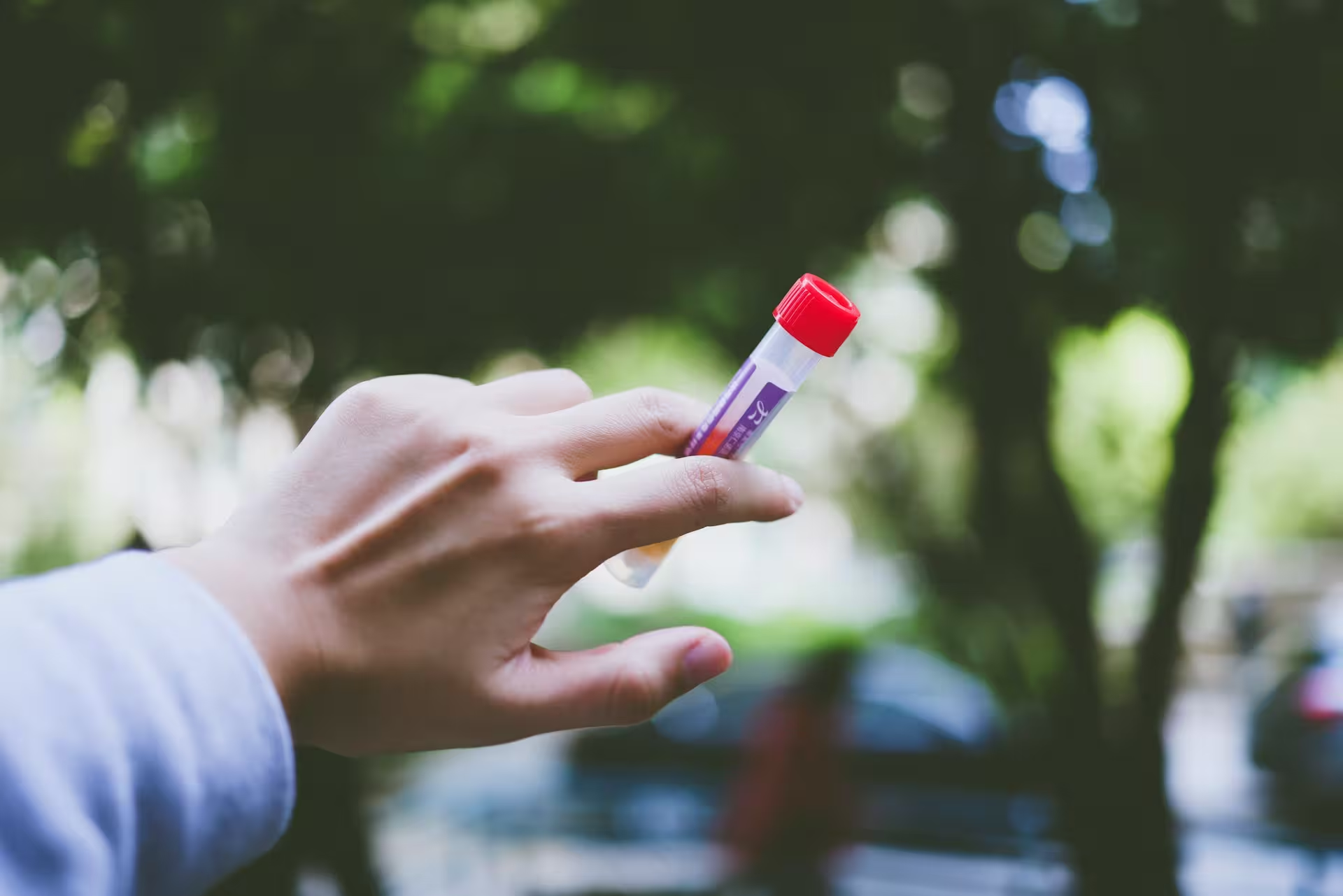
Understand your hormonal health with Everlab’s doctor-reviewed female hormone tests in Australia. Get clear insights into FSH, PCOS, perimenopause, and more.

Everlab - Australia’s leading personal longevity clinic.

Learn more
Need more info?
Book a call