










Tyrer-Cuzick Test for Breast Cancer Risk Assessment
Tyrer Cuzick model supports breast cancer risk assessment by identifying key risk factors, helping individuals & doctors create early intervention strategies.





Breast cancer remains one of the most common cancers affecting women in Australia and worldwide. Early detection and personalised risk assessment are central to improving outcomes. One of the most clinically recognised tools for evaluating individual risk is the Tyrer-Cuzick model, also known as the IBIS Breast Cancer Risk Evaluation Tool.
This article explains how the Tyrer-Cuzick model works, what it measures, how to interpret your results, and how it fits within Australia's evolving approach to breast cancer screening. As with all health information, the guidance here is general in nature and does not replace advice from your treating doctor or specialist.
The Tyrer-Cuzick model is a statistical tool designed to estimate a person's risk of developing invasive breast cancer, both over the next 10 years and across their lifetime (up to age 85). It was first published in 2004 and has been updated over time (most recently to Version 8 in 2017), incorporating new evidence about the genetic and hormonal factors that influence breast cancer risk.
It's the breadth of data it draws on. Rather than focusing on one or two risk factors, it integrates personal medical history, detailed family history across multiple generations, hormonal and reproductive factors, and genetic information into a single, individualised risk estimate.
The tool is used in clinical settings across Australia, the UK, the US, and internationally, and is recognised by Cancer Australia as part of its familial risk assessment framework.
Important note on who this tool applies to: The Tyrer-Cuzick model was developed primarily using data from people assigned female at birth. People who are transgender or non-binary with breast tissue should discuss their individual risk profile with their GP or a specialist, as standard risk models may require clinical adaptation.
Traditional breast cancer screening programmes use a "one size fits all" approach, offering mammograms at set ages regardless of individual risk.
While this has clear public health benefits, it doesn't account for the significant variation in risk between individuals.
Personalised risk assessment tools like the Tyrer-Cuzick model allow clinicians and patients to make more informed decisions: people at higher risk may benefit from earlier or more frequent screening, additional imaging (such as MRI), or preventive strategies; people at lower risk may be appropriately reassured.
This shift toward risk-stratified care is now a growing focus of breast health policy in Australia and internationally.
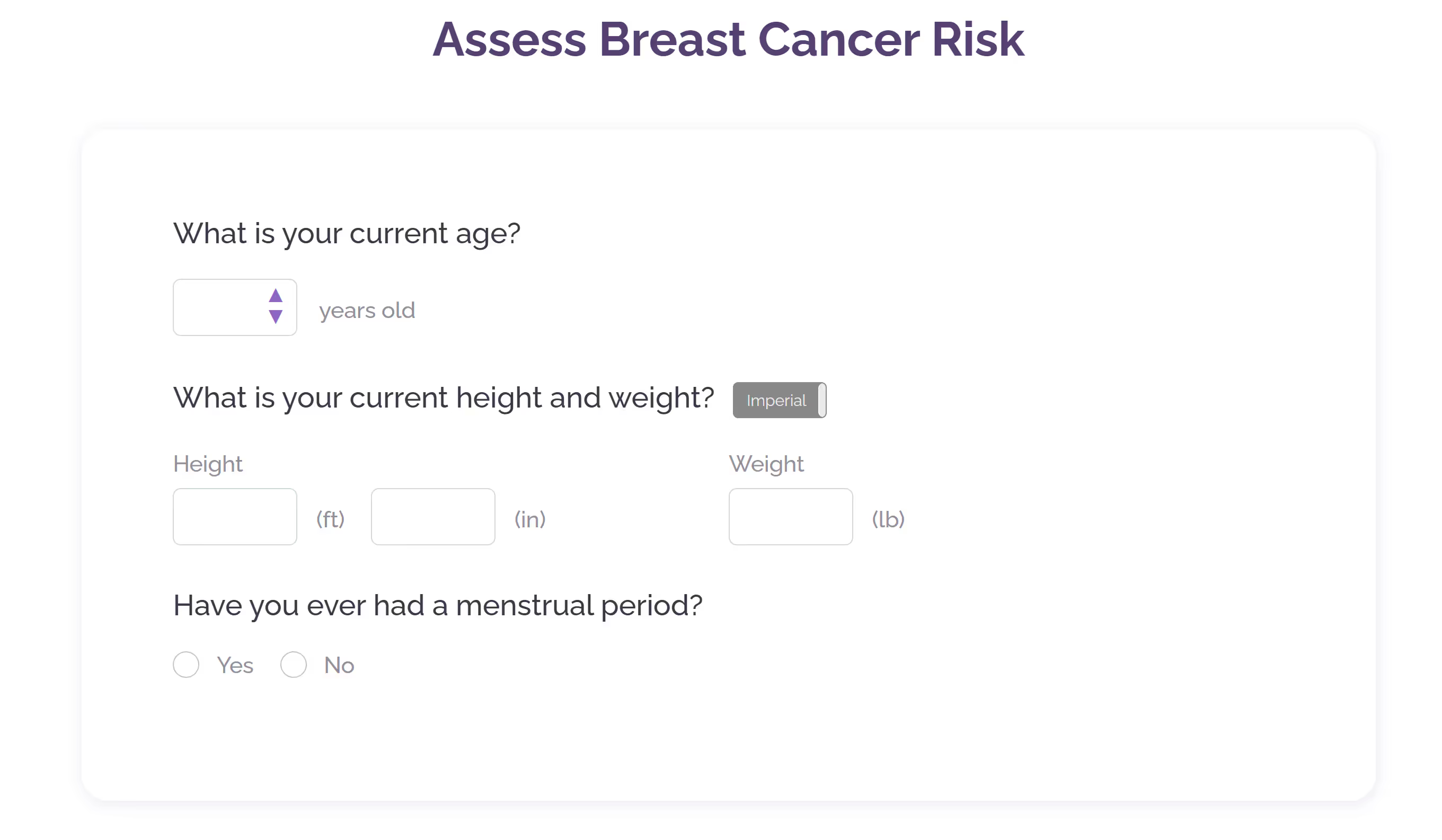
The calculator requires detailed input about personal and family medical history.
By analysing this data, it produces two primary risk estimates for invasive breast cancer:
These estimates guide decisions about screening frequency, imaging modality, referral to genetic counselling, and in some cases, preventive medications or specialist consultation.
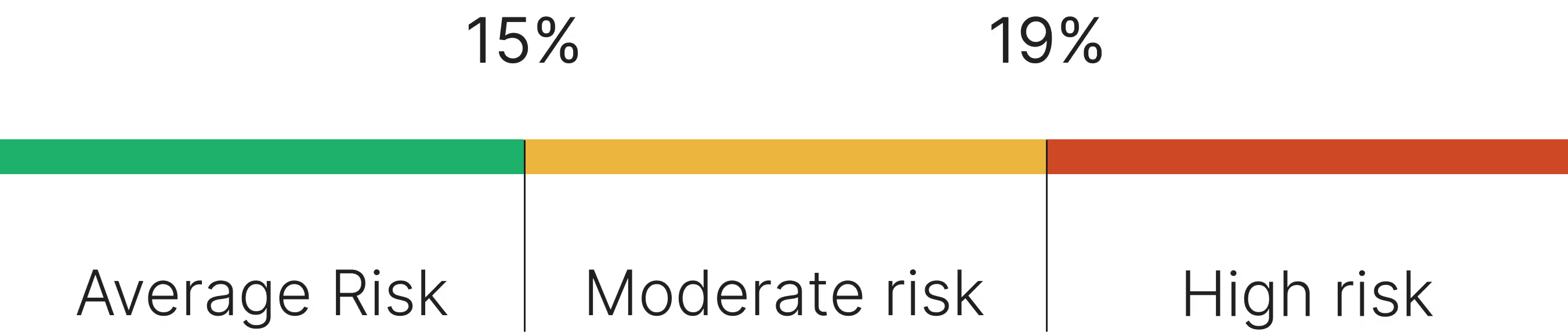
These categories are used by clinicians to guide screening recommendations.
A high Tyrer-Cuzick score does not mean you will develop breast cancer.
It means your risk is elevated relative to the general population, and that additional monitoring or preventive discussion may be appropriate.
Your Tyrer-Cuzick result should always be interpreted in consultation with your GP or a specialist, who will consider it alongside your full clinical picture.
General guidance includes:
Preventive options, including risk-reducing medications, exist and may be appropriate for some people at high risk. These are clinical decisions to be made with your healthcare team, not based on a risk score alone.
The Tyrer-Cuzick model is one of several validated breast cancer risk tools used in clinical practice:
The Tyrer-Cuzick model is often preferred for its detailed multi-factorial approach, particularly its extended family history capture and inclusion of BRCA1/2.
No single model is universally superior, and the right tool depends on individual circumstances.
Here are some common methods used to screen for and monitor breast cancer:
The Tyrer-Cuzick risk assessment calculator can help identify if enhanced screening is needed.
Breast density refers to the proportion of glandular and connective tissue relative to fatty tissue as seen on a mammogram.
It is classified on a four-point BI-RADS scale: A (almost entirely fatty), B (scattered fibroglandular), C (heterogeneously dense), and D (extremely dense).
Dense breast tissue raises breast cancer risk in two ways: it is associated with a higher biological risk of cancer, and it can obscure tumours on mammograms, making early detection harder.
Women with heterogeneously or extremely dense breasts (categories C and D) have approximately 1.6 to 2 times the cancer risk of women with fatty breasts.
In a landmark policy update, BreastScreen Australia's 2024 Position Statement now recommends that all women screened through BreastScreen be informed in writing of their breast density following a screening mammogram. This is a significant shift from previous policy. Women are encouraged to discuss what their density result means for their screening choices with their GP or breast cancer specialist.
Implementation is rolling out across Australian states and territories, with some programs (including South Australia from 2023 and Victoria from 2024/2025) already notifying women routinely. If you have had a BreastScreen mammogram and were not informed of your breast density, you can ask your GP to request this information.
If you have dense breasts, supplemental screening options such as ultrasound or MRI are available outside the BreastScreen program through a GP referral. These are discussed with you in the context of your overall risk profile and personal circumstances.
The Tyrer-Cuzick model is a valuable clinical tool, but it has important limitations that should be understood:
The score represents your estimated probability of developing invasive breast cancer, either over the next 10 years or across your lifetime (to age 85). Below 15% is considered average risk, 15–19% is moderate, and 20% or above is high risk. Your GP can help you understand what your score means for your screening plan.
A lifetime risk below 15% is considered average, meaning your risk is in line with the general population.
The assessment is available through your GP, through specialist breast clinics, or through preventive health services like Everlab. Some clinics offer it as part of a broader health risk review. Online results should always be discussed with a clinician.
Yes, in certain circumstances. Women under 60 with a lifetime risk greater than 30% or a 10-year absolute risk greater than 5% (assessed using a clinically validated tool such as Tyrer-Cuzick) may be eligible for a Medicare rebate for breast MRI under Item 63464. Speak to your GP about whether you qualify.
A high Tyrer-Cuzick score typically triggers a conversation with your GP about enhanced surveillance (e.g., annual mammography and/or MRI), referral to a familial cancer clinic or genetic counsellor, and discussion of preventive options. It does not require immediate action, but it does open the door to a more tailored approach to your breast health.
No. Preventive surgery is very rarely indicated and is a decision reserved for a small number of people with very high genetic risk (such as confirmed BRCA1/2 pathogenic variants), made jointly with a specialist team after thorough discussion. A risk score alone is never the basis for this decision.
The Gail model uses a different calculation method. A 5-year risk of 1.67% or higher is often used as a threshold for clinical decision-making in some guidelines, particularly for women over 35 considering preventive medications.
Disclaimer: This article is for general health information purposes only. It does not constitute medical advice and does not replace a consultation with your treating GP, specialist, or genetic counsellor. Individual risk assessment and screening decisions should always be made in partnership with a qualified healthcare professional.
Steven is a specialist general practitioner, preventative health consultant, medical educator, healthcare entrepreneur and co-founder of Everlab. With 15+ years of clinical experience, and driven by his passion for preventive care outcomes, Steven is dedicated to personalised and innovative approaches to enhance well-being, extend human lifespan, and improve healthspan.


Clinician, medical educator, and med-tech developer with 16+ years of clinical experience and 25+ years in the health industry. Passionate about proactive longevity, preventative health, and optimising health outcomes through innovative, integrated, and holistic approaches. Experienced across rural emergency medicine, motorsport medicine, and longevity-focused care, with a research background in gastrointestinal health and a first-author publication. Dedicated to enhancing well-being, healthspan, and lifespan through evidence-based, forward-thinking healthcare solutions.


Join 1000's of Australians improving their health with proactive, personalised healthcare.

