VO₂ Max Test vs Wearables: How Accurate Are Garmin, WHOOP and Apple Watch?


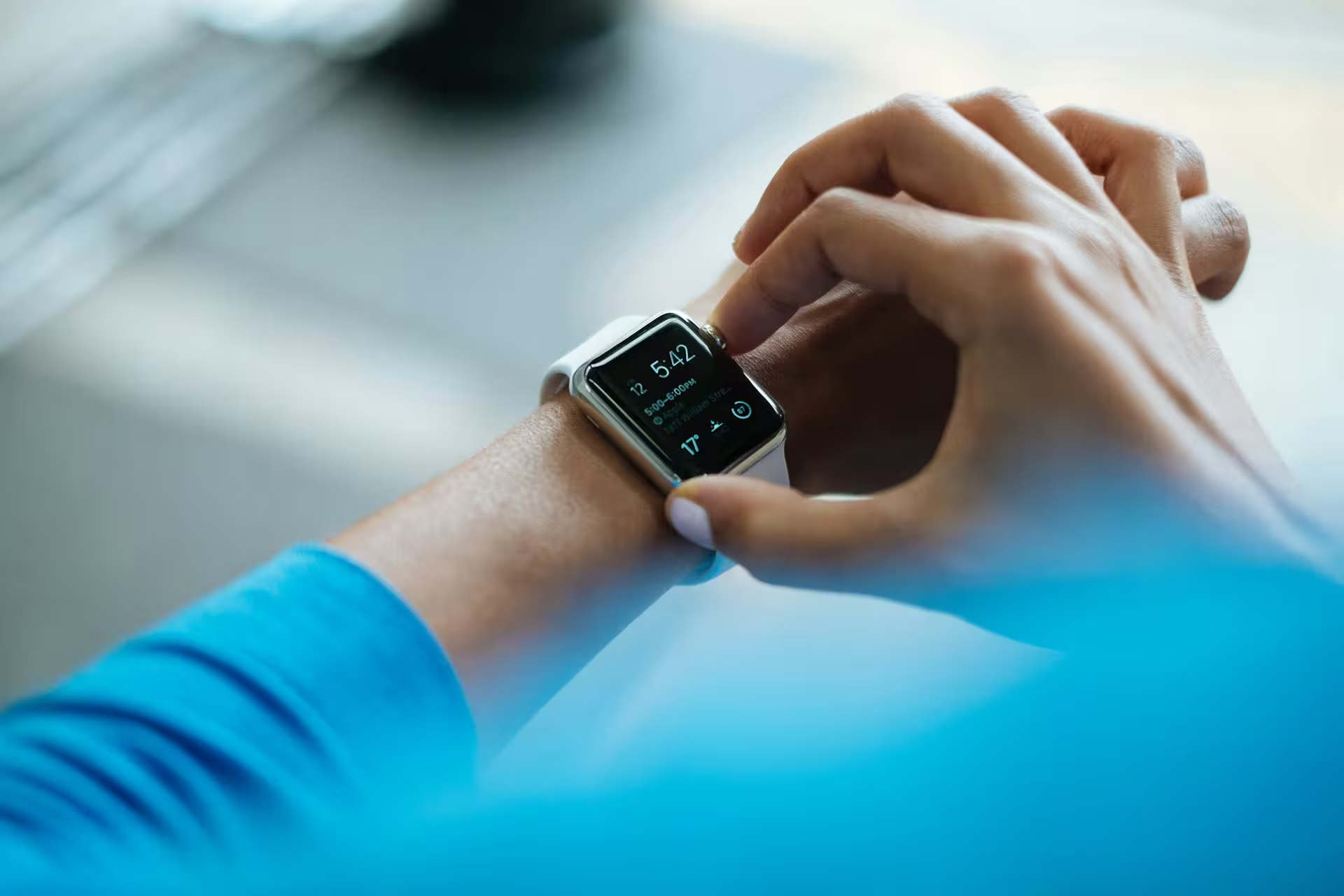
If your smartwatch already gives you a VO₂ max estimate, it's reasonable to wonder whether you need a laboratory VO₂ max test. Garmin, Apple Watch and WHOOP all provide convenient ways to monitor cardiovascular fitness, but how accurate are their measurements compared with clinical testing?
The key difference is direct measurement versus estimation. A laboratory VO₂ max test measures oxygen consumption during exercise using specialised gas-analysis equipment. Wearable devices use information such as heart rate, movement, running pace and personal characteristics to estimate aerobic fitness through proprietary algorithms.
Both approaches can be useful, but they aren't interchangeable. Wearables can help you monitor fitness trends during everyday training, while laboratory testing provides a directly measured baseline and additional physiological information. This VO₂ max vs wearables guide compares Garmin, Apple Watch and WHOOP accuracy, examines the scientific evidence, and explains when a clinical assessment may be worthwhile.
What Is VO₂ Max and Why Does It Matter?
VO₂ max, also called maximal oxygen uptake or maximal oxygen consumption, represents the highest rate at which your body can take in, transport and use oxygen during intense exercise. It's typically expressed in millilitres of oxygen per kilogram of body weight per minute (mL/kg/min). VO₂ max reflects the combined performance of your cardiovascular and respiratory systems and the ability of your working muscles to extract and use oxygen.
A higher VO₂ max generally indicates greater aerobic capacity, which is important for endurance exercise and overall cardiorespiratory fitness. Research has consistently identified cardiorespiratory fitness as an important indicator of long-term health. A scientific statement from the American Heart Association describes fitness as a potential clinical vital sign that can add context to traditional risk factors such as blood pressure. Higher fitness levels are associated with lower risks of cardiovascular disease and all-cause mortality, although VO₂ max cannot replace a broader assessment of cardiovascular and metabolic health.
However, VO₂ max is only one part of a broader health assessment. A high score doesn't rule out cardiovascular disease, and a lower result isn't a diagnosis. Understanding how the measurement is obtained is essential before using it to make decisions about your fitness or health.
VO₂ Max Test vs Wearables: What's the Difference?
The main distinction is how each method calculates your aerobic capacity. A laboratory VO₂ max test measures respiratory gas exchange directly during progressively demanding exercise.
A wearable device estimates VO₂ max by analysing physiological signals and exercise performance without directly measuring the oxygen you inhale and exhale. Both approaches provide results in the same units, but that doesn't mean they offer the same measurement accuracy.
Clinical VO₂ Max Testing
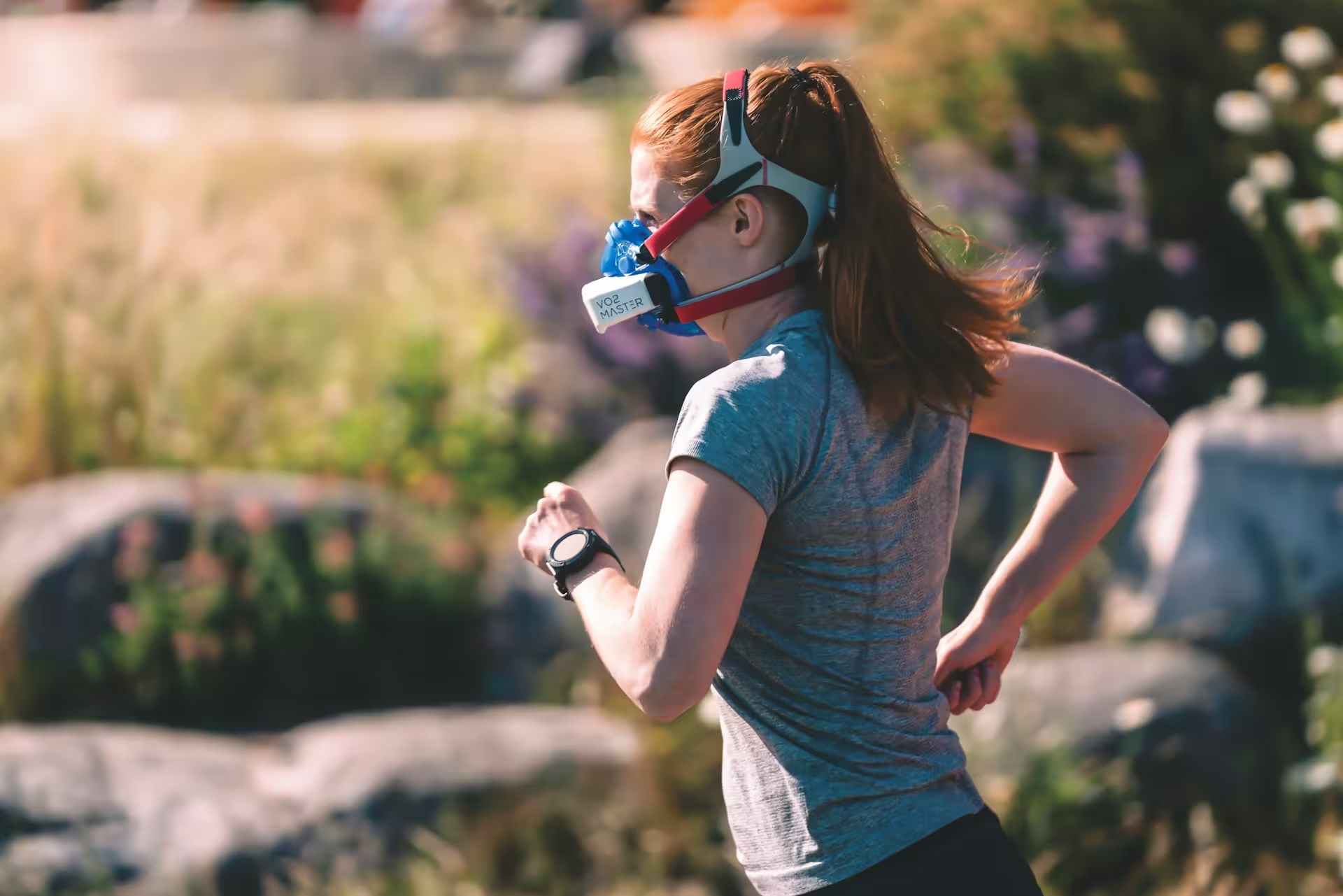
During a laboratory-based maximal exercise test, you exercise on a treadmill or stationary bike while wearing a mask connected to a metabolic analysis system. Trained personnel measure the volume and composition of inhaled and exhaled air, including oxygen consumption and carbon dioxide production. This direct measurement is widely considered the gold standard for assessing maximal aerobic capacity.
As exercise intensity increases, your oxygen demand rises. The assessment records your oxygen uptake throughout the graded exercise test and identifies the highest value achieved. When appropriate maximal-effort criteria are met, the result may be reported as VO₂ max. Otherwise, the highest recorded value may be described as VO₂ peak.
Clinical exercise testing can also record respiratory frequency and the respiratory exchange ratio (the relationship between carbon dioxide output and oxygen uptake). These measurements may help trained professionals interpret exercise effort and physiological responses, although not every assessment reports them. Test quality, equipment calibration, protocol and participant effort still matter.
Wearable VO₂ Max Estimates
Smartwatches cannot directly measure respiratory oxygen consumption.
Instead, their algorithms analyse combinations of information such as:
- Heart rate during physical activity
- Running pace or walking speed
- GPS and motion sensor data
- Cycling power, where supported
- Age, sex, height and body weight
- Resting physiological measurements and activity history
The device uses relationships between these variables and cardiorespiratory fitness to estimate VO₂ max, producing a fitness metric rather than a direct measurement of maximal oxygen consumption. Accuracy depends on the algorithm, device model, quality of wearable data and the individual wearing it.
Garmin vs Apple Watch vs WHOOP: VO₂ Max Accuracy Compared
Garmin, Apple Watch and WHOOP approach VO₂ max estimation differently.
No single device can be declared universally the most accurate based on these findings. The available studies test different devices, algorithms and participant populations. Their accuracy figures should therefore not be treated as results from one directly comparable experiment.
How Accurate Is Garmin's VO₂ Max Estimate?
Garmin devices use performance analytics developed through Firstbeat to estimate aerobic capacity. Firstbeat has published technical work on automated fitness level estimation using heart-rate and speed data. On compatible running devices, the algorithm evaluates the relationship between GPS-derived running speed and heart rate. The general principle is that a fitter person can sustain a given running pace with less relative cardiovascular effort.
Compatible cycling devices can use cycling power and heart-rate information to calculate a sport-specific estimate. Garmin's approach has undergone scientific evaluation, though results vary by model and study population.
What Research Says About Garmin Accuracy
A 2019 validation study in the International Journal of Environmental Research and Public Health compared consumer activity trackers with laboratory measurements of VO₂ max and energy expenditure. Among the devices assessed, the Garmin Forerunner 920XT produced a mean absolute percentage error of approximately 7.3% for VO₂ max estimation. However, its results still showed statistically significant underestimation compared with laboratory testing.
More recent research examining the Garmin Forerunner 245 in 35 moderately trained and highly trained endurance athletes also identified underestimation. The study reported average differences of approximately 4.73 mL/kg/min after the first run and 4.05 mL/kg/min after the second run, relative to laboratory measurements.
These findings suggest Garmin estimates can provide useful information, but individual results may differ meaningfully from directly measured VO₂ max. An average error across a study does not establish close absolute agreement for every individual. They also highlight an important limitation: validation findings for one Garmin model shouldn't automatically be applied to every device or software version.
What Affects Garmin VO₂ Max Accuracy?
Garmin's estimates depend heavily on accurate relationships between exercise performance and cardiovascular effort.
Several factors can affect the result:
- Maximum heart rate settings: An inaccurate maximum heart rate estimate can affect how the algorithm interprets your data.
- Heart-rate sensor quality: Poor wrist-sensor contact or movement artefacts may affect recorded data.
- GPS accuracy: Running pace estimates can be less reliable when satellite reception is poor.
- Environmental conditions: Heat, altitude and humidity can alter heart-rate responses.
- Training status: Fatigue, illness and recent changes in exercise load may affect performance.
- Exercise selection: Not all workouts generate an updated VO₂ max estimate.
Garmin devices can provide useful longitudinal fitness information, particularly when activity and measurement conditions are relatively consistent.
However, don't treat a smartwatch estimate as an exact substitute for laboratory testing.
How Accurate Is Apple Watch VO₂ Max?
Apple Watch uses its Cardio Fitness feature in the Apple Health app to estimate cardio fitness, reported as VO₂ max. Compatible devices use heart-rate and motion data collected during qualifying outdoor walking, running and hiking workouts. The algorithm also considers age, sex, height, weight, and certain medications that affect heart-rate responses.
Unlike a laboratory VO₂ max test, Apple Watch doesn't require maximal exercise to generate an estimate. This makes the feature convenient for everyday users, including people who aren't undertaking structured endurance training.
Apple Watch VO₂ Max Accuracy: What the 2025 Study Found
A 2025 peer-reviewed study published in PLOS ONE investigated Apple Watch VO₂ max accuracy compared with direct laboratory gas analysis.
Researchers from University College Dublin recruited 30 adults who wore an Apple Watch to generate a fitness estimate before completing a maximal treadmill exercise test. The study found that Apple Watch generally underestimated directly measured VO₂ max.
The key findings were:
- Mean underestimation: 6.07 mL/kg/min
- Mean absolute error: 6.92 mL/kg/min
- Mean absolute percentage error: 13.31%
These results indicate meaningful differences between the wearable estimates and laboratory measurements in the study population.
For someone whose true VO₂ max is 40 mL/kg/min, a difference of several units could influence how their fitness is classified against age- and sex-specific reference values. However, the findings shouldn't be interpreted as proof that every Apple Watch model underestimates every user's VO₂ max by the same amount. The study had a relatively small sample, and accuracy may vary with Apple Watch Series generation, algorithm updates and individual characteristics. Its statistical findings should not be extrapolated to all models or healthy adults without further validation.
Why Might Apple Watch Underestimate VO₂ Max?
Apple Watch relies on the relationship between heart rate and activity performance.
Several factors can affect that relationship, including:
- Inaccurate or incomplete heart-rate recordings
- Limited qualifying outdoor workouts
- GPS or movement measurement errors
- Medication effects on heart rate
- Individual differences in cardiovascular responses
- Differences between submaximal activity and maximal exercise performance
For example, medications that alter heart-rate responses may affect an algorithm that uses heart rate to estimate exercise intensity.
Apple also specifies conditions under which qualifying workouts can contribute to Cardio Fitness estimates. The feature is therefore best understood as a convenient estimate of cardiorespiratory fitness rather than a directly measured clinical result.
How Accurate Is WHOOP VO₂ Max?
WHOOP approaches VO₂ max estimation differently from wearables that primarily calculate results from individual running workouts. Its current algorithm uses physiological and activity information gathered during regular wear, with additional refinement available from outdoor running data.
WHOOP also allows users to incorporate a laboratory-measured VO₂ max result into its estimation system. The approach is designed to provide ongoing fitness information without requiring users to complete a maximal exercise test.
How WHOOP Calculates VO₂ Max
WHOOP describes three approaches within its VO₂ max estimation system.
1. Passive estimation
The default model uses information relating to resting physiology, physical activity, sleep and personal characteristics. This allows WHOOP to produce a VO₂ max estimate without requiring a dedicated running test.
2. GPS-augmented estimation
When suitable outdoor running data are available, WHOOP incorporates running pace and heart-rate responses. These exercise measurements provide additional information about the relationship between performance and cardiovascular effort.
3. Laboratory-calibrated estimation
Users with a laboratory-measured VO₂ max result can enter that measurement to help calibrate subsequent estimates. This lets a laboratory baseline inform ongoing wearable-based monitoring.
What WHOOP's Validation Data Show
In April 2026, WHOOP published technical information about its updated VO₂ max estimation algorithm. According to the company, its internal validation involved 248 participants who completed graded treadmill tests with direct respiratory gas analysis.
WHOOP reported the following results:
These figures suggest that the current algorithm can produce estimates reasonably close to laboratory measurements within WHOOP's internal evaluation.
However, these are manufacturer-reported validation results, not findings from an independent study of the current algorithm. That distinction matters when comparing WHOOP against Garmin and Apple Watch research conducted by external investigators.
Independent, peer-reviewed validation and future research on WHOOP's current VO₂ max estimation system remain important for understanding its accuracy across different populations and real-world conditions.
Is WHOOP Accurate for Highly Trained Athletes?
Elite endurance athletes can present particular challenges for estimation algorithms. Their physiological responses and aerobic capacity may differ substantially from the populations used to develop or validate a device. Some algorithms may underestimate or overestimate individuals at the extremes of fitness.
WHOOP's internal findings provide useful information, but they don't establish identical accuracy for recreational users, highly trained athletes, older adults or people with medical conditions. For competitive athletes who need precise measurements to guide training decisions, laboratory testing remains a valuable option.
Which Wearable Has the Most Accurate VO₂ Max?
There isn't enough directly comparable independent evidence to confidently rank Garmin, Apple Watch and WHOOP from most accurate to least accurate across all users. The studies discussed above differ in several important respects. Garmin validation research has examined specific watch models, including studies involving trained endurance athletes.
The 2025 Apple Watch study involved a comparatively small sample of adults and assessed agreement with maximal treadmill testing. WHOOP's current accuracy figures come primarily from its manufacturer's published internal validation.
Because participant characteristics, device versions, protocols and statistical methods differ, comparing their reported percentages directly could be misleading. A more useful conclusion is that all three devices provide estimates, and all may differ from an individual's laboratory-measured VO₂ max. The best choice depends on whether you're seeking convenient fitness monitoring or a directly measured physiological baseline.
What Scientific Reviews Say About Wearable VO₂ Max Accuracy
Individual device studies are useful, but systematic reviews provide a broader perspective. A 2022 systematic review and meta-analysis from the INTERLIVE network, published in Sports Medicine, examined the validity of VO₂ max estimates from consumer wearables. The review included 14 validation studies.
Researchers found that wearable algorithms using exercise-based information generally produced more accurate estimates than those relying primarily on resting measurements. For exercise-based algorithms, the average systematic difference from laboratory measurements was close to zero. However, the limits of agreement remained relatively wide, meaning low group-level bias did not guarantee accurate individual estimates.
This distinction is important. A device can perform well when results are averaged across a population while still producing substantial errors for individual users. The researchers concluded that wearable VO₂ max estimates may have practical value but require further improvements before being relied upon for precise individual sporting or clinical assessments. The review also recommended more consistent validation methods, including appropriate reference tests, participant selection and statistical reporting.
Can Wearables Reliably Track VO₂ Max Improvements?
One of wearable technology's strongest practical advantages is its ability to collect health data and fitness estimates repeatedly, often through connected fitness apps. Instead of visiting a laboratory for every measurement, users can view estimated VO₂ max changes during their regular training. This can help identify broad trends, particularly when data collection and exercise conditions are reasonably consistent.
However, a change in the displayed number doesn't necessarily reflect the same change in directly measured aerobic capacity. For example, a smartwatch may show a decline because heart-rate responses change in hot weather, fatigue, or illness.
Likewise, better GPS or heart-rate data could change the estimated score without a corresponding physiological improvement. Wearable trends are therefore most useful when interpreted alongside training performance, exercise history and other fitness measures.
How Much Change Is Meaningful?
Suppose your watch estimates a VO₂ max of 42 mL/kg/min one month and 44 mL/kg/min the next. That may reflect improved aerobic fitness, but it could also fall within the variability of the estimation method. The importance of the difference depends on the device's measurement reliability and the conditions in which the estimates were generated.
A single small increase or decrease should not automatically be treated as evidence of genuine physiological change. Consistent trends over longer periods, supported by changes in exercise performance, are generally more informative. Laboratory testing can establish a directly measured baseline against which you can evaluate future fitness changes.
Why Might Your Watch and Laboratory VO₂ Max Results Differ?
It's not unusual for a wearable estimate and laboratory result to disagree.
Several factors contribute to these differences.
1. Different Measurement Methods
A laboratory test measures oxygen consumption through respiratory gas analysis. A smartwatch estimates aerobic capacity using relationships between heart rate, movement and performance data. The results are generated through fundamentally different methods.
2. Maximum Heart Rate Assumptions
Wearable algorithms may use measured or predicted maximum heart-rate information. If the estimated maximum heart rate differs substantially from your actual physiological response, the VO₂ max estimate may be affected.
3. Exercise Conditions
Heat, humidity, altitude, hills and running surfaces can influence cardiovascular responses. These factors may change the relationship between heart rate and pace without representing a lasting change in aerobic capacity.
4. Sensor Accuracy
Wrist-based optical heart-rate measurements are convenient but can be affected by fit, movement and signal quality. Inaccurate sensor readings may affect exercise intensity calculations.
5. Training and Recovery
Fatigue, recent training load and temporary illness can affect exercise performance. A wearable may interpret these short-term changes differently from a controlled laboratory assessment.
6. Exercise Modality
Running and cycling tests can produce different VO₂ max values because they involve different muscle recruitment patterns and sport-specific adaptations. Comparing a cycling laboratory result against a running-based smartwatch estimate may therefore introduce additional differences.
When Is a Laboratory VO₂ Max Test Worth It?
Not everyone needs laboratory VO₂ max testing. For many people, a smartwatch provides enough information to support general fitness monitoring and encourage regular physical activity. However, a directly measured VO₂ max test may be useful in several circumstances.
Establishing an Accurate Fitness Baseline
If you want to understand your current aerobic capacity more precisely, laboratory gas analysis provides a direct measurement rather than an algorithm-generated estimate. This may be particularly useful when beginning a structured fitness programme.
Creating Personalised Training Zones
Laboratory-based testing can provide information about oxygen consumption, ventilation and exercise responses across increasing workloads. Depending on the test protocol and analysis performed, these results may help identify ventilatory thresholds and individualised training intensities. This information can support a more tailored exercise prescription than relying on a generic percentage of maximum heart rate alone.
Monitoring Endurance Performance
Runners, cyclists and other endurance athletes may benefit from directly measured aerobic fitness data. Laboratory testing can help establish baseline physiological performance and evaluate changes following training. However, VO₂ max is only one determinant of endurance performance. Exercise economy, thresholds, recovery, body composition and sport-specific skills also matter.
Understanding Differences Between Wearable Estimates
If Garmin, Apple Watch or WHOOP gives you noticeably different VO₂ max values, a laboratory assessment can provide a useful reference point. It may help you understand which estimate is closer to your measured aerobic capacity under the conditions tested.
Supporting a Broader Physical Assessment
VO₂ max is an important measure of cardiorespiratory fitness, but it doesn't capture every aspect of physical health. Strength, stability, mobility and functional endurance also contribute to physical performance and healthy ageing. Combining aerobic testing with other physical assessments can provide a broader view than relying on a single wearable number.
How to Get More Useful VO₂ Max Data From Your Wearable
Whether you use Garmin, Apple Watch or WHOOP, a few practical steps can help improve the consistency and usefulness of your estimates.
Keep Your Personal Information Updated
Make sure age, height, weight and other relevant profile details are accurate. Some estimation algorithms incorporate these variables directly.
Improve Heart-Rate Data Quality
Wear your device as directed by the manufacturer and keep the sensor in consistent contact. Where supported, a compatible chest-strap heart-rate monitor may help improve exercise heart-rate measurements.
Complete Suitable Workouts
Garmin and Apple Watch use qualifying activities to generate or update certain VO₂ max estimates. WHOOP uses ongoing physiological information and may improve estimation precision when suitable GPS-based running data are available. Follow the requirements for your particular device rather than assuming every workout contributes equally.
Compare Trends Under Similar Conditions
Try to interpret changes using comparable activities and environmental conditions. A difficult run on a hot day may produce different physiological signals from an otherwise similar run in cool weather.
Focus on Performance, Not Just the Number
Consider whether you're able to sustain a faster pace, cycle at a higher power output or complete aerobic exercise more comfortably. These changes provide useful context for interpreting an estimated VO₂ max improvement. The most useful fitness monitoring combines objective measurements with performance and personal experience.
Frequently Asked Questions About VO₂ Max Testing and Wearables
Is Garmin VO₂ Max Accurate?
Garmin VO₂ max estimates can help you monitor aerobic fitness, especially during regular running or cycling. However, independent validation studies have identified differences between certain Garmin models and laboratory measurements. Accuracy varies by device, individual, and testing conditions.
How Accurate Is Apple Watch VO₂ Max?
A 2025 validation study found that Apple Watch underestimated laboratory-measured VO₂ max by approximately 6.07 mL/kg/min on average, with a mean absolute percentage error of 13.31%. These results describe the study population and should not be assumed to apply identically to every user or device.
Is WHOOP VO₂ Max Reliable?
WHOOP reports mean absolute errors of approximately 3.3–3.7 mL/kg/min for its current algorithm, depending on the estimation method. These figures come from the company's internal validation. Further independent research would help clarify accuracy across different users.
Which Is More Accurate: Garmin or Apple Watch?
Available research doesn't establish that one is consistently more accurate for everyone. Accuracy depends on the specific model, software, exercise conditions and characteristics of the user.
Can a Smartwatch Replace a VO₂ Max Test?
A smartwatch can provide a convenient estimate of cardiovascular fitness and help monitor trends. However, it doesn't directly measure respiratory gas exchange and cannot provide all the physiological information available through laboratory testing; it should not be used alone for clinical diagnostics or major health decisions.
Why Is My Garmin VO₂ Max Different From My Apple Watch?
Garmin and Apple Watch use different algorithms, activity requirements and sensor information. Differences in workout selection, heart-rate measurements, personal settings and data processing can produce different estimates.
Can Wearables Detect Small Improvements in VO₂ Max?
They may detect broader trends, but small changes can reflect estimation variability rather than genuine physiological improvement. The reliability of change detection depends on the device and measurement conditions.
How Often Should You Get a Laboratory VO₂ Max Test?
The appropriate interval depends on your fitness goals and clinical circumstances. For general long-term monitoring, repeating testing approximately every 6–12 months may be reasonable. Athletes following structured programmes may require different intervals.
Measure Your VO₂ Max With Everlab
Everlab offers maximal and submaximal VO2 max testing, with the appropriate protocol determined by individual screening and clinical suitability. Maximal testing directly measures oxygen consumption, while submaximal testing provides an estimate of aerobic capacity.
Wearables can help you track your fitness over time, but a direct measurement of your aerobic capacity provides additional context. Everlab's VO₂ Max & Physical Assessment combines VO₂ max testing with strength, stability and endurance assessments in a 90-minute session. The assessment uses physiological measurements to establish your aerobic fitness baseline and provide information for personalised training.
Expert physiotherapists and coaches review and analyse results, supporting a broader understanding of physical performance and functional fitness. For people interested in improving endurance, monitoring fitness as they age, or developing more individualised exercise strategies, the assessment offers a way to move beyond a wearable estimate.
The goal isn't simply to obtain a higher VO₂ max score. It's to understand your current capabilities and use that information to make better-informed decisions about training, physical activity and long-term fitness.
Explore Everlab's VO₂ Max & Physical Assessment
VO₂ max testing may not be suitable for everyone. Medical screening or clearance may be required before maximal exercise testing. Results should be interpreted by appropriately qualified healthcare or exercise professionals and should not be used as a standalone diagnosis.
References
- Lambe R, O'Grady B, Baldwin M, Doherty C. Investigating the accuracy of Apple Watch VO₂ max measurements: A validation study. PLOS ONE. 2025. Read the study.
- Passler S, Bohrer J, Blöchinger L, Senner V. Validity of Wrist-Worn Activity Trackers for Estimating VO₂max and Energy Expenditure. International Journal of Environmental Research and Public Health. 2019. Read the study.
- Validity of VO₂max Estimates From the Forerunner 245 Smartwatch in Highly vs. Moderately Trained Endurance Athletes. Read the research.
- Molina-Garcia P, et al. Validity of Estimating the Maximal Oxygen Consumption by Consumer Wearables: A Systematic Review With Meta-Analysis and Expert Statement of the INTERLIVE Network. Sports Medicine. 2022. Read the review.
- Firstbeat Technologies. Automated Fitness Level (VO₂max) Estimation With Heart Rate and Speed Data. Technical white paper. Read the technical report.
- Apple. Track Your Cardio Fitness Levels. Apple Support.
- WHOOP. How Accurate Is WHOOP VO₂ Max? Inside the Algorithm and Its Validation. April 2026. Read WHOOP's technical explanation.
- Everlab. VO₂ Max Testing in Australia. Everlab VO₂ Max Assessment.

Dr. Frankie is a medical doctor, longevity consultant, and elite spearfisherman dedicated to high-performance preventative medicine. A former varsity athlete and kinesiology graduate, he aims to bridge the gap between clinical data and extreme physical mastery. From engineering clinical AI to hunting at 40m depths and chasing world-class strength records, Frankie focuses on practical strategies to optimize healthspan and push the boundaries of human performance.

Dr. Frankie is a medical doctor, longevity consultant, and elite spearfisherman dedicated to high-performance preventative medicine. A former varsity athlete and kinesiology graduate, he aims to bridge the gap between clinical data and extreme physical mastery. From engineering clinical AI to hunting at 40m depths and chasing world-class strength records, Frankie focuses on practical strategies to optimize healthspan and push the boundaries of human performance.