








9 Reasons Your Body Is Unable to Recover From Exercise
When your body is unable to recover from exercise, you need to examine the reasons why. We have also included muscle recovery tips that can help.
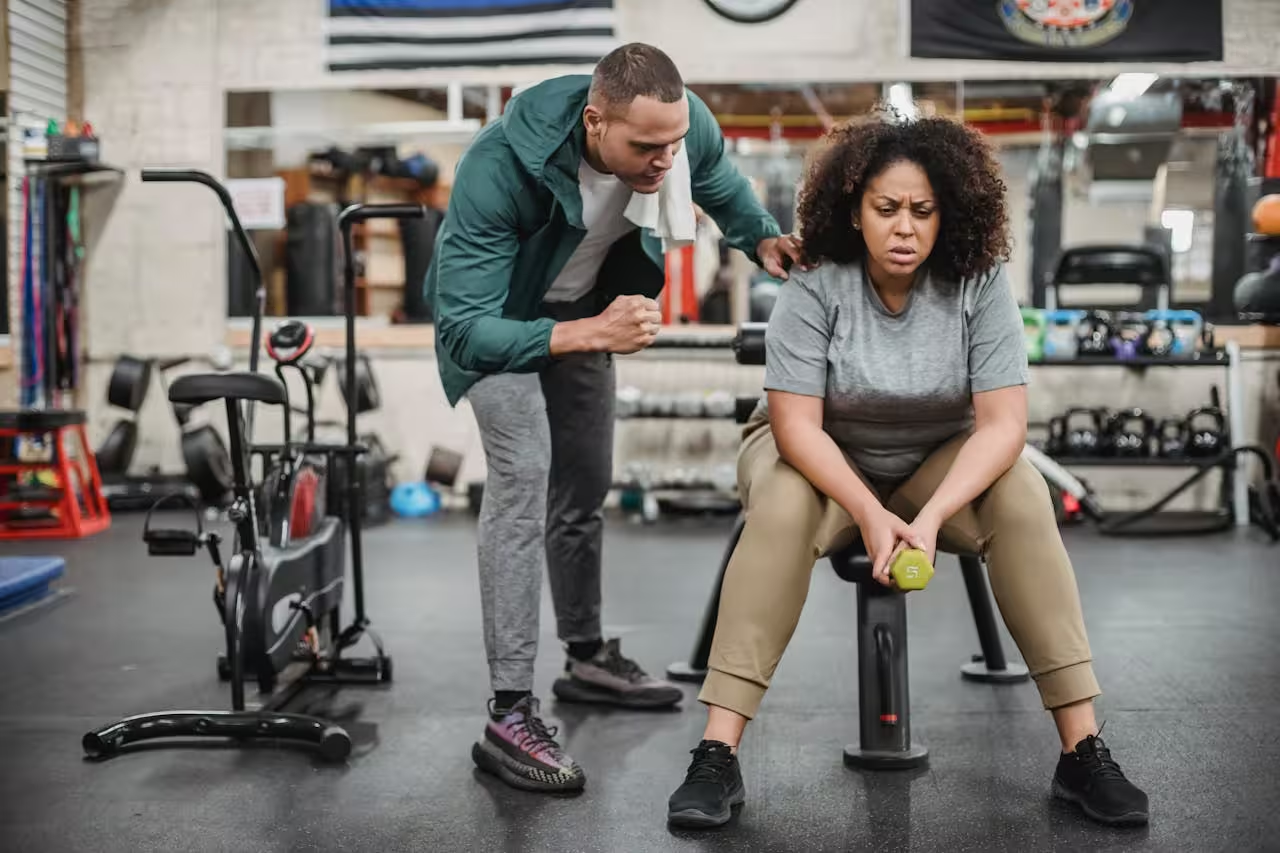
Have you ever left the gym expecting mild soreness but ended up with a feeling of ‘fatigue’?
During resistance training and other intense exercise, your muscles experience microscopic tears in the muscle fibres, which is a normal part of building strength and endurance. This initiates the recovery process, where your body undergoes a series of complex physiological processes to repair and strengthen the muscles.
In medical terms, exercising is a catabolic process that breaks down bodily tissues; recovering from exercise is an anabolic process that repairs and restores them. If you’re not “bouncing back” from catabolism, the bridge between these two processes has collapsed. It’s not a lack of perseverance. Instead, it’s a lack of adaptation.
Muscle recovery is an essential part of any successful fitness journey, yet it’s often overlooked in favour of pushing harder or training more frequently. After intense exercise, your body undergoes a complex process to repair and rebuild muscle fibres, restore glycogen stores, and reduce muscle soreness.
One common experience after a tough workout is delayed-onset muscle soreness (DOMS), which can leave sore muscles feeling tender and stiff for days. While some soreness is a normal part of adaptation, implementing effective recovery strategies is key to minimising discomfort and maximising results.
Understanding the recovery process not only helps reduce muscle soreness but also supports long-term progress and injury prevention. By prioritising muscle recovery, you set the foundation for consistent improvement and a healthier, more sustainable approach to fitness.
Look, if you’re constantly feeling "gutted" instead of just a bit stiff after a session, you’re likely stuck in a catabolic rut where your body’s just not rebuilding. We’ll help you bridge that gap at Everlab with a proper medical plan, so you’re actually adapting to the hard work rather than just spinning your wheels.
Here are the 9 medically recognised reasons your body isn’t bouncing back and how to muscle recovery properly.
Everybody has a Maximum Recoverable Volume (MRV). The mechanical load of your exercise program creates exercise-induced muscle damage in your muscle tissue and metabolic byproducts, like lactic acid, that need to be cleared out before you can do your next workout.
Varying the muscle groups you target in your workouts is important, as alternating muscle groups allows for adequate recovery time between sessions and helps prevent injury. When your training load exceeds your body’s ability to deal with the recovery demands of this damage, you end up in a state of non-functional overreaching. Your muscles become sore and overwhelmed. Increasing workout intensity gradually, rather than suddenly, can help prevent overtraining and injury.
Repairing broken-down muscle tissue is an endocrine process that predominantly happens during sleep. Quality sleep is one of the most critical factors in muscle recovery. During deep sleep, the anterior pituitary gland secretes Growth Hormone (GH), which signals cells to initiate protein synthesis.
For most people, aiming for 7 to 9 hours of adequate sleep each night is recommended to support optimal recovery. People who engage in intense workouts may need even more rest than the average person to ensure a good night's sleep and full recovery. Chronic sleep loss (less than 7 hours) or reduced sleep quality, such as that caused by Apnoea, deprives your body of this muscle repair.
Glycogen is the polymer of glucose and the preferred energy source for moderate to heavy exercise. If you’re exercising frequently, but not eating enough carbohydrates to replenish glycogen stores, your muscles will be locked in a metabolically depleted state. Consuming complex carbohydrates alongside protein is an effective way to restore energy for muscle recovery.
Repairing the structural microtrauma caused by strength training breaks down the food we eat into a continuous supply of amino acids (protein) that muscles use to repair themselves. Protein aids recovery processes in the body and helps promote muscle recovery after exercise. If there’s not enough of this essential building block available, MPS levels plummet, and you end up in a state of chronic soreness.
For the average sedentary person, medical guidelines recommend a minimum protein intake of 0.8g/kg body weight. For an athlete, this recommendation ranges between 1.2g and 2.0g/kg body weight. This is the raw material that fuels Muscle Protein Synthesis (MPS). Sports nutrition strategies often emphasise the timing and quantity of protein intake to enhance muscle recovery and growth, and protein powder can be a convenient way to meet these protein needs, especially post-workout.
Recovery from exercise depends on micro-level blood circulation. Your blood is required to deliver hormones, nutrients, and proteins to localised areas in your muscles after you work out. Blood flow is also responsible for draining waste products that can impair the recovery process.
Chronic dehydration, conditions like atherosclerosis, high blood pressure, or even vessel spasms caused by excess stress can impact both macro and micro-circulation negatively. Proper hydration can promote blood circulation, maintaining a blood volume that enables the optimal transport and delivery of hormones, proteins, and nutrients to enhance muscle recovery times.
Physiologically, human beings use the same system, the HPA Axis, to handle work stress as they do during intense workouts. If you’re under high levels of daily life stress, it elevates the levels of cortisol in your blood. High stress levels can negatively impact the body's ability to recover from physical activity by affecting muscle recovery and overall health.
Cortisol is a catabolic hormone. It can inhibit muscle repair processes and encourage muscle breakdown. Instead of positively affecting your adaptation to exercise, your workout ends up having a negative effect.
Hydration is not only about quenching your thirst. Blood represents less than 10% of your total body water volume. However, it is critical to transport nutrients and oxygen to recovering tissues and remove their waste products from the body. Dehydration increases the thickness of your blood, which reduces its capacity to carry nutrients and dissipate the heat your muscles generate after exercise.
In addition, electrolytes like sodium, potassium, and magnesium are essential for muscle cells to relax after they’ve contracted during your workout. Dehydration can cause an electrolyte imbalance, affecting your recovery post-workout. Strategic hydration is important, especially during intense exercise sessions. Consider high-quality electrolyte powders with at least 400 to 600 mg of sodium per serve to support your recovery.
Recovering from exercise requires your body to shift from a sympathetic metabolic state, the ‘Fight or Flight’ mode it operates in during exercise, back to a parasympathetic, ‘Rest and Digest’, state. Many people "smash themselves" at the gym and then immediately jump into a stressful work meeting or hectic drive in traffic.
A gradual cool-down with gentle movement, such as walking or box breathing, should follow workouts to promote post-workout recovery and help regulate body temperature. Incorporating static stretching into your cool-down routine helps lengthen muscles and prevent tightness.
If your recovery rate is disproportionately low compared to your training load, it might be due to an underlying deficiency, such as:
Eating an adequate, balanced diet while living an overall healthy lifestyle helps avoid undiagnosed deficiencies that could restrict post-workout muscle recovery. Certain nutrients, such as omega-3 fatty acids, possess anti-inflammatory properties that support tissue health. This nutrient is mostly found in salmon and walnuts. Bromelain, an enzyme found in pineapple, also tends to lower soreness after a workout. It also supports immune health, which is essential for muscle recovery.
Active recovery strategies can help with recovery after heavy sessions in the gym. Exercises such as light cardio, yoga, and foam rolling are great ways to increase blood flow and reduce muscle soreness.
Light workouts such as walking, cycling, or swimming will increase the blood flow in your muscles since they require very little effort to perform. Increased circulation will also transport the nutrients and oxygen needed to repair your damaged muscles. Dynamic stretching or foam roller techniques can help release the tension in your muscles and improve exercise performance.
Modern muscle recovery aids can also significantly improve muscle recovery and reduce muscle soreness. Professional athletes often use these tools as part of their recovery routine to maintain peak athletic performance. Foam rollers, for example, have many applications when it comes to recovering muscles after workouts. They can break the adhesions in your muscle fibres and improve blood flow to the area. Compression garments also improve blood flow by minimising muscle oscillation, which ultimately reduces fatigue and soreness in your muscles. Massage guns and vibrating foam rollers can reduce the time your muscles take to recover by targeting specific tense muscles to relieve and relax them.
By incorporating these aids in your recovery plan, you will improve blood flow to your muscles and ensure that they recover and grow after every workout.
An effective recovery routine is essential if you want to support muscle recovery and reach your fitness goals. An effective recovery plan should consist of active recovery techniques, recovery aids, as well as proper nutrition and rest days. Try to listen to your body and create a fitness regimen that works for you. Don’t push yourself too hard if your body requires rest.
Muscle recovery strategies should focus on supporting the body's natural repair processes. Including healthy fats in your diet, increasing protein intake, and drinking enough water help manage inflammation and help your body repair. In addition, regular, low-intensity activities support muscle function and performance. Many top fitness and health newsletters also recommend tracking these habits weekly to ensure consistency.
Struggling to recover from the gym is not a sign urging you to work harder. It’s a diagnostic signal that something about your internal health or environment is not conducive for growth. It's important to pay attention to your body's signals and watch out for soreness, fatigue, or discomfort. Adjusting your recovery methods based on these signals can lead to better muscle recovery and optimal recovery, helping you avoid overtraining and injury.
At Everlab, we take exercise physiology beyond generic recommendations or guesswork using comprehensive blood pathology. We measure relevant biomarkers, such as hormones, nutrients, and inflammation markers, so we can pinpoint exactly what’s holding you back. Exercise should be a positive stimulus for health instead of a source of chronic toxicity. Turning fitness guesswork into medical insight ensures that the work you put into the gym earns you the rewards you deserve.

Steven is a specialist general practitioner, preventative health consultant, medical educator, healthcare entrepreneur and co-founder of Everlab. With 15+ years of clinical experience, and driven by his passion for preventive care outcomes, Steven is dedicated to personalised and innovative approaches to enhance well-being, extend human lifespan, and improve healthspan.


Join 1000's of Australians improving their health with proactive, personalised healthcare.

