
TSH (Thyroid Stimulating Hormone) Blood Test in Australia
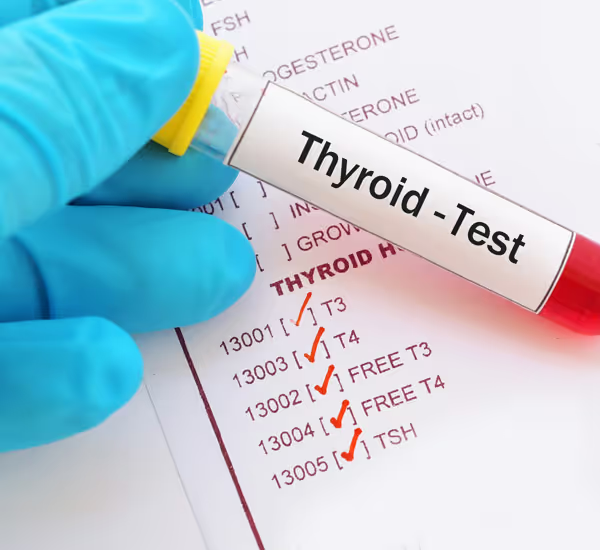
Everlab's TSH blood test measures thyroid stimulating hormone, the signal your pituitary gland sends to tell your thyroid how hard to work. A result that's technically "normal" isn't the same as optimal, a TSH sitting at the higher end of the standard range has been independently linked to higher BMI, body fat, and blood pressure, even while still in range. TSH is part of your core Everlab blood panel, not a standalone test.
What:
Blood biomarker
Tests for:
Thyroid stimulating hormone levels for clinician interpretation of thyroid function
Referral:
Required (arranged by Everlab as part of your blood panel)
Member cost:
Part of your core blood panel
Always consult your healthcare professional about your results. This service does not replace advice from your doctor.
This page covers what TSH measures, what influences it, what your result actually means, and why where you sit within the normal range matters as much as whether you're in it at all. Like most blood tests and TSH tests specifically, your test results are most useful read in context, not as a standalone number.
What Is a TSH Blood Test?
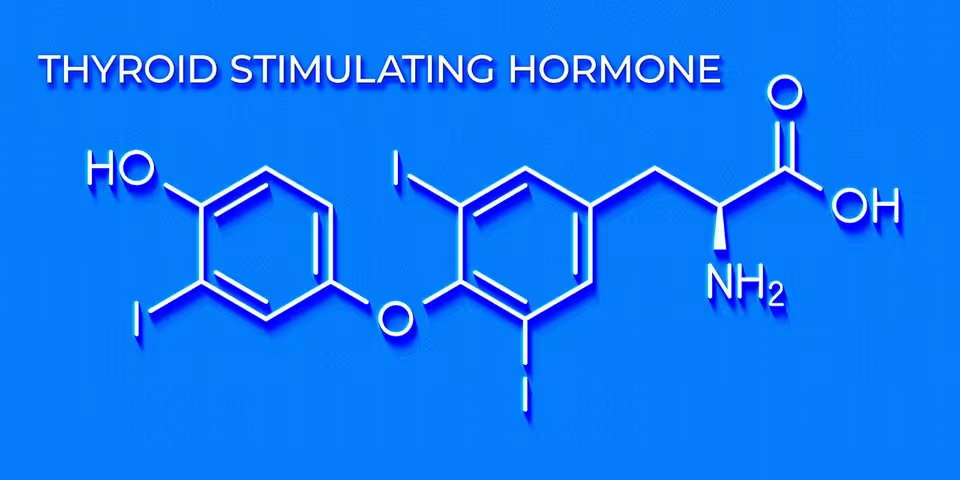
TSH stands for thyroid stimulating hormone, made by the pituitary gland, a small gland at the base of your brain, and it tells your thyroid gland how much hormone to produce. A TSH blood test is usually the first of the thyroid function tests ordered when assessing thyroid disorders, since it's a sensitive early signal of thyroid dysfunction. TSH is part of the hypothalamic-pituitary-thyroid (HPT) axis, a feedback loop that keeps thyroid hormone levels balanced.
Your thyroid gland influences metabolism, energy levels, heart rate, and mood, part of the many body functions it regulates, which is why thyroid imbalance can cause non specific symptoms affecting how you feel in a lot of different ways at once.
A quick note on terminology: primary hypothyroidism, where the thyroid gland itself isn't producing enough hormone, is far more common than central hypothyroidism, a rarer form caused by pituitary disease affecting the signal to the thyroid rather than the thyroid itself. Congenital hypothyroidism, identified through newborn babies' routine screening, is a separate, unrelated topic from adult TSH testing.
What Does TSH Measure?
TSH reflects how your thyroid is functioning overall. A high TSH generally means your underactive thyroid gland isn't producing enough thyroid hormone (hypothyroidism); a low TSH generally means it's producing too much thyroid hormone (hyperthyroidism). Everlab's doctors interpret your TSH result alongside your broader health profile, not as a standalone diagnosis.
Why Does Where You Sit in the Range Matter?
Most people who get a "normal" TSH result assume that's the end of the conversation. It often isn't. A study published in the Journal of Clinical Medicine (2019) found that a TSH result at the higher end of the standard reference range, while still technically normal, was independently associated with higher BMI, body fat percentage, and blood pressure compared to a result sitting lower in the same range.
This is exactly why Everlab reviews your TSH result in context, alongside your broader metabolic and hormonal panel, rather than simply confirming whether you fall inside or outside a single reference range.
What Affects TSH Levels?
A wide range of factors can shift thyroid hormones and TSH values, including some unrelated to any underlying medical conditions.
- Time of day: TSH follows a daily pattern, typically higher at night and lower in the morning.
- Stress and illness: cortisol can temporarily suppress TSH.
- Sleep: poor sleep can disrupt your usual TSH pattern.
- Diet and nutrients: low iodine, selenium, or zinc can impair thyroid function, and over-supplementation (particularly iodine) can also disrupt it.
- Hormonal changes: menopause can affect thyroid output and how your body responds to it.
- Medications: certain medications can affect thyroid function. Let your Everlab doctor know about anything you're taking regularly.
How Is a TSH Blood Test Performed?
No fasting is required for TSH specifically. A small blood sample is taken from your arm as part of your regular Everlab blood draw, no separate appointment needed. TSH is measured in milliunits per litre (mU/L).
TSH is often read alongside other thyroid tests, including free thyroxine (free T4), free T3, and thyroid antibodies such as thyroid peroxidase (anti-TPO) antibodies, for a fuller picture where clinically relevant. Antibody testing is a general way clinicians investigate autoimmune causes of thyroid dysfunction, which a TSH result alone can't identify. In iodine sufficient areas like Australia, autoimmune causes are generally more common contributors to thyroid dysfunction than dietary iodine deficiency.
How Do I Prepare for a TSH Blood Test?
- Avoid biotin supplements (commonly found in hair and nail products) for 48 hours beforehand, they can interfere with lab results.
- Testing in the morning can help reduce the effect of TSH's natural daily fluctuation.
- Let your doctor know if you're taking thyroid medication or hormone therapy.
What Is a Normal TSH Level?

Reference ranges vary slightly between laboratories, so always check the specific range printed on your own results to find your normal tsh value. A commonly used adult reference range is approximately 0.4 to 4.5 mU/L. A result above this range can suggest an underactive thyroid, and a result below it can suggest an overactive thyroid gland or thyroid hormone medicine effects. As above, where your result sits within this range, not just whether it's in range, is part of what your Everlab doctor considers. Research discussed in the Cleveland Clinic Journal of Medicine suggests that once certain confounding factors are excluded from population data, the underlying distribution of TSH in a disease-free population may sit closer to 0.4 to 2.5 mU/L, a narrower band worth being aware of, though not a replacement for your lab's own stated reference range.
TSH is also a remarkably sensitive marker: because of how the pituitary gland and thyroid gland regulate each other, a roughly two-fold change in free thyroxine (T4) can produce a roughly one-hundred-fold change in TSH, a relationship documented in thyroid physiology literature. This is part of why TSH is usually the first marker checked when assessing thyroid status, small shifts in actual thyroid hormone levels show up as much larger, easier-to-detect shifts in TSH.
Does Normal TSH Change With Age?
Yes, and this matters for interpreting your own result. Population data from the US National Health and Nutrition Examination Survey (NHANES III), discussed in a Cleveland Clinic Journal of Medicine review, shows the upper limit of normal TSH rises with age, from around 3.5 mU/L in people under 50 to around 7.5 mU/L in people over 80, reflecting normal physiological change rather than thyroid disease in many older adults. A TSH value that would prompt concern in a younger adult may be unremarkable in an elderly patient, which is exactly why Everlab reviews your result in the context of your age and overall health, not against one fixed number for every adult.
What Is Subclinical Hypothyroidism?
Subclinical hypothyroidism describes a TSH result above the normal range, commonly between about 4.5 and 10 mU/L, while free T4 remains normal, without the more pronounced symptoms seen in overt hypothyroidism. It's a genuinely common finding, particularly in elderly patients, and current clinical practice guidelines generally don't recommend treating mild cases in older adults without symptoms, since mild elevation can reflect normal ageing rather than a problem requiring treatment. The reverse pattern, a low TSH with normal T3 and T4, is called subclinical hyperthyroidism.
A Note for Pregnant Members
TSH reference ranges shift during pregnancy, and thyroid monitoring is a standard, important part of prenatal care. Everlab's program isn't designed to provide care during pregnancy, so if you're pregnant or planning a pregnancy, thyroid monitoring should be managed by your GP or obstetrician, who can track your results against pregnancy-specific reference ranges across your trimesters.
What Can an Abnormal TSH Result Mean?
A consistently high or low TSH can affect multiple body systems over time, which is why ongoing imbalance is worth discussing with your doctor rather than managing informally. A biochemical diagnosis, the pattern across TSH and related hormone levels, matters more than any single number in isolation.
Elevated TSH is generally associated with an underactive thyroid, and more pronounced or overt hypothyroidism can relate to fatigue, weight gain, and changes in bowel habits.
Low TSH is generally associated with an overactive thyroid, and more pronounced or overt hyperthyroidism can relate to anxiety, sleep difficulty, and unintentional weight changes, hyperthyroid symptoms that your doctor will weigh alongside your actual results.
Most people tested have no thyroid problems at all and are euthyroid patients, meaning their thyroid is functioning normally. Your Everlab doctor will advise on appropriate next steps based on your specific result and health history.
Are There Risks or Limitations?
- Not the full picture alone: TSH doesn't reveal how much active thyroid hormone (T3 and T4) is circulating, or how well your tissues are using it. Some people feel unwell with a "normal" TSH but altered T3 or T4, which is why your doctor may consider additional thyroid markers where symptoms persist.
- Affected by acute illness and everyday factors: time of day, recent illness, and stress can all shift your result, which is a recognised limitation in laboratory medicine generally, not specific to TSH.
- Not for indiscriminate use: clinical practice guidelines generally don't recommend testing people with a low pre-test probability of thyroid disease, meaning no symptoms and no relevant risk factors, since this can lead to more incidental findings than genuinely useful information.
- Not diagnostic alone: abnormal TSH results may prompt your doctor to consider further thyroid investigation. Your doctor will advise on appropriate next steps based on your clinical presentation and results.
Always consult your healthcare professional about your results. This service does not replace advice from your doctor.
Sources
- Australian Thyroid Foundation. Understanding the Thyroid. Available from: https://www.thyroidfoundation.org.au/Understanding-the-Thyroid
- Pathology Tests Explained. Thyroid Function Tests. Available from: https://pathologytestsexplained.org.au/ptests.php?q=Thyroid+function+tests
- American Thyroid Association. Thyroid Patient Information. Available from: https://www.thyroid.org/thyroid-information/
- High TSH Level within Normal Range Is Associated with Obesity, Dyslipidemia, Hypertension, Inflammation, Hypercoagulability, and the Metabolic Syndrome: A Novel Cardiometabolic Marker. J Clin Med. 2019. doi:10.3390/jcm8060817
- Most elderly patients with subclinical hypothyroidism do not need to be treated (age-related TSH reference range changes, drawing on National Health and Nutrition Examination Survey III data). Cleve Clin J Med. Available from: https://www.ccjm.org/content/92/4/221
- Biochemical Testing of the Thyroid: TSH is the Best and, Oftentimes, Only Test Needed, A Review for Primary Care. Clin Med Res. Available from: https://www.clinmedres.org/content/14/2/83
Explore More From Everlab
- Liver Function Test (LFT): another core panel marker reviewed alongside your hormonal health. Learn more.
- Insulin Sensitivity: another hormonal marker where "normal" and "optimal" can differ. Read more.
Get On Top Of Your TSH Levels
Your thyroid can affect everything from your weight to your mood to your energy—and it can fall out of balance for years before symptoms scream for help. A TSH blood test is a simple but powerful step in understanding what’s going on beneath the surface. But it’s even more powerful when combined with a full picture of your health.
.avif)
Additional FAQs
%402x%20(2).svg)


imaging
biomarkers
sterols
Book a Free Discovery Call
Join 20,000+ Australians improving their health with proactive, personalised healthcare.