
Full Blood Count (FBC) Test
The full blood count (FBC) test, also known as the complete blood count (CBC) or full blood examination (FBE), is one of the most frequently ordered blood tests worldwide. This is no surprise, as it provides a broad overview of what’s happening in the body, from oxygen transport and immune response to bone marrow function.

What:
Blood biomarker
Tests for:
Blood cell counts, size, and function
Referral:
Required
Member cost:
Part of larger blood panel
The FBC is widely used in preventive health, acute care, and chronic disease management. It is often ordered when symptoms such as fatigue or easy bruising are present, or to monitor existing conditions and assess responses to treatment.
A full blood count (FBC) forms part of the Everlab blood tests, giving you a clearer view of how your body is functioning beneath the surface. By checking key blood markers and having them reviewed by a qualified clinician, Everlab helps you spot meaningful changes early and understand what’s worth following up with your GP, even before symptoms become obvious.
Understanding what a full blood count measures, and why its results matter, can help you feel more informed about what the test may indicate about your health.
What Is a Full Blood Count Test?
A full blood count measures the number, size, and characteristics of circulating blood cells. These include red blood cells, white blood cells, and platelets. All are produced primarily in the bone marrow before being released into the bloodstream to perform essential functions.
Red blood cells carry oxygen from the lungs to tissues throughout the body. White blood cells form a key part of the immune system, helping defend against infection and participating in inflammatory responses. Platelets play a vital role in blood clotting, helping prevent excessive bleeding when blood vessels are damaged.
Beyond simply counting cells, the FBC also assesses average red blood cell size, haemoglobin content, and cell distribution. Together, these values provide additional insight into red blood cell production, nutritional status, inflammation, and chronic disease. For this reason, the full blood count is commonly used for screening and ongoing monitoring, as changes can sometimes appear before symptoms become noticeable.
Why the Full Blood Count Matters
The full blood count reflects how blood cells are being produced and maintained at a given point in time. It can help screen for, support diagnosis of, and monitor a wide range of conditions, including infections, iron deficiency anaemia, vitamin and mineral deficiencies, immune-related disorders, bone marrow conditions, chronic inflammatory disease, and blood cancers.
It is also frequently used to monitor responses to treatment, such as chemotherapy, immunosuppressive therapy, or iron supplementation. Subtle changes over time may provide early clues that further investigation is needed.
To better understand the FBC, it helps to look at its main components: red blood cells, white blood cells, and platelets. These are outlined below.
Red Blood Cells
The primary role of red blood cells is to transport oxygen throughout the body. Each red blood cell contains haemoglobin, an oxygen-carrying protein that binds oxygen in the lungs and releases it to tissues where energy production is required.
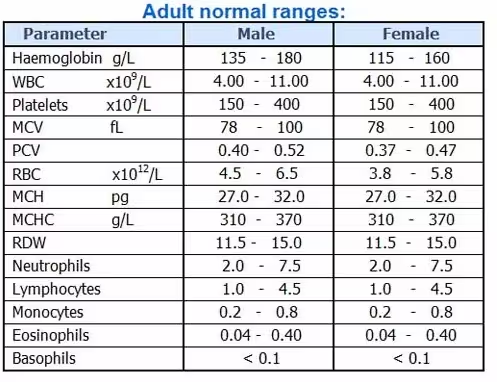
A full blood count assesses red blood cells using several related measurements, including:
- Haemoglobin: the protein in red blood cells that carries oxygen
- Haematocrit or packed cell volume: the proportion of blood made up of red blood cells
- Mean cell volume (MCV): the average size of red blood cells
- Mean cell haemoglobin (MCH): the amount of haemoglobin in each red blood cell
- Mean cell haemoglobin concentration (MCHC): how concentrated haemoglobin is within red blood cells
When red blood cell count or haemoglobin levels are low, this is referred to as anaemia. Anaemia may occur due to iron deficiency, vitamin B12 or folate deficiency, chronic disease, blood loss, or bone marrow failure.
Higher-than-normal red blood cell counts can occur with dehydration, chronic lung disease, or other conditions that stimulate increased red blood cell production.
Mean cell volume reflects red blood cell size and helps distinguish different types of anaemia. Reference ranges vary by laboratory but are typically between 80 and 100 femtolitres. A low MCV indicates microcytic anaemia, often associated with iron deficiency or inherited blood disorders such as thalassaemia. A high MCV is commonly seen in macrocytic anaemia, which may be related to vitamin B12 or folate deficiency.
Anaemia can also occur with a normal MCV. This pattern, known as normocytic anaemia, is often associated with chronic disease, kidney disease, acute blood loss, or bone marrow disorders.
MCH reflects the average amount of haemoglobin in each red blood cell and often changes alongside MCV. MCHC, by contrast, reflects how densely packed haemoglobin is within the cell. A low MCHC suggests hypochromia, most commonly seen in iron deficiency. Elevated MCHC is uncommon and may be associated with conditions that affect red blood cell shape or membrane integrity, such as hereditary spherocytosis.
White Blood Cells
White blood cells are essential for immune defence, helping protect the body from infection and other foreign substances.
The full blood count measures total white blood cell count as well as a differential count, which includes:
- Neutrophils: fight bacterial and some viral infections
- Lymphocytes: support immune responses and antibody production
- Monocytes: help break down pathogens and dead cells
- Eosinophils: involved in allergic responses and parasite defence
- Basophils: release substances that regulate immune responses
An increased white blood cell count, known as leukocytosis, is commonly associated with infection or inflammation. It may also occur in response to stress, trauma, or corticosteroid use. Markedly elevated levels can prompt investigation for bone marrow disorders or blood cancers.
A low white blood cell count, or leukopenia, may result from viral infections, autoimmune conditions, bone marrow suppression, or chemotherapy, and can increase susceptibility to infection.
Platelets
Platelets are small cell fragments that circulate in the bloodstream and play a key role in blood clotting. They gather at sites of blood vessel injury to help stop bleeding.
The full blood count assesses both platelet count and platelet volume. Abnormal results can have clinical significance.
A low platelet count, known as thrombocytopenia, may lead to easy bruising or prolonged bleeding, and in severe cases, spontaneous bleeding. Causes include immune-mediated platelet destruction, bone marrow disorders, viral infections, and certain medications.
A high platelet count, called thrombocytosis, may occur in inflammatory states, infection, iron deficiency, or bone marrow conditions. In some cases, persistently elevated platelet counts can increase the risk of clotting.
How the Full Blood Count Is Performed
A full blood count requires a venous blood sample taken from the arm by a healthcare professional. The process usually takes only a few minutes.
A tourniquet is applied, the skin is cleaned, and a needle is inserted into a vein to collect the blood sample. After collection, the needle is removed, pressure is applied, and the site is covered with a dressing.
A small bruise may appear at the site but typically resolves within a day or two. The sample is then sent to a laboratory for analysis.
There are very few risks associated with an FBC. If bleeding occurs after the sample is taken, applying firm pressure is usually sufficient. Most people can return to normal activities straight away.
Do You Need to Prepare for a Full Blood Count?
No special preparation is usually required for a full blood count. You can eat, drink, and take your usual medications unless you are having other blood tests at the same time that require preparation.
Staying well hydrated can make blood collection easier for many people, so drinking water in the days leading up to the test may be helpful.
FBC and Bone Marrow Function
All blood cells are produced in the bone marrow, so changes in bone marrow function are often reflected in the full blood count.
Conditions such as bone marrow failure syndromes, aplastic anaemia, myelodysplastic syndromes, and some blood cancers can lead to reduced numbers of red cells, white cells, and platelets.
Increased blood cell production can also be seen in certain conditions and may prompt further investigation rather than indicating healthy overproduction.
FBC in Chronic Disease Management and Long-Term Health
Chronic conditions can influence blood cell production and lifespan. Chronic kidney disease, inflammatory disorders, and autoimmune conditions can cause anaemia of chronic disease, where iron utilisation and red blood cell production are impaired.
Chronic lung disease may stimulate increased red blood cell production as the body adapts to lower oxygen availability. Ongoing inflammation can also affect white blood cell and platelet counts.
Tracking FBC results over time can help clinicians monitor how chronic conditions are evolving and how the body is responding to treatment.
Interpreting Full Blood Count Results
Interpreting an FBC requires context. Results should be considered alongside symptoms, medical history, medications, and other test results.
Reference ranges vary between laboratories, and what is normal for one person may differ for another due to factors such as age, sex, health status, or altitude.
Abnormal results do not always indicate disease. Temporary changes can occur with infection, dehydration, recent illness, or physical stress. For this reason, repeat testing or additional investigations are often required.
The Full Blood Count and Disease Prevention
While a full blood count does not prevent disease on its own, it can support early identification of potential health issues and guide further evaluation. When subtle changes are detected, clinicians may recommend lifestyle adjustments, nutritional assessment, or additional testing where appropriate.
Monitoring blood results over time rather than relying on isolated tests provides a clearer picture of how health, illness, stress, and treatment affect blood cell production and immune balance.
Because blood reflects the function of multiple systems, including the bone marrow, kidneys, liver, and immune system, the full blood count offers valuable insight into overall health when interpreted carefully and in context.
Final Thoughts
The full blood count is more than a routine blood test. It provides detailed information about the cells responsible for oxygen transport, immune defence, and clotting.
As with all medical tests, results should be reviewed with a qualified healthcare professional who can interpret findings and recommend appropriate next steps.
The Everlab program measures several parameters within the FBC twice yearly alongside a broad range of other blood markers. Results are reviewed by a qualified clinician and reported in context to support informed discussions with your GP about your health.
Sources
- Full blood count- Australian Government
- Full blood count- Pathology Tests Explained
Why Should You Do A Full Blood Count (FBC) Test?
A full blood count is critical because it provides a broad snapshot of how your blood cells are being produced and maintained, which can reflect infection, anaemia, inflammation, or bone marrow issues. When tracked over time and interpreted in context, it helps guide further investigation and monitor changes in overall health.
Additional FAQs
%402x%20(2).svg)


imaging
biomarkers
sterols
Book a Free Discovery Call
Join 20,000+ Australians improving their health with proactive, personalised healthcare.