
Comprehensive Skin Cancer Check
Two out of three Australians will be diagnosed with skin cancer in their lifetime. This reflects Australia's extremely high rate of skin cancer, largely driven by UV exposure, and highlights why awareness and regular skin checks matter. Many people do not recognise the early warning signs, and early detection gives the best chance of simple and effective treatment. With Everlab's SkinCheck+, your skin, including moles, lesions and spots, is examined and reviewed by a specialist to help identify features that may need medical attention.

What:
Skin Cancer Check
Tests for:
Skin abnormalities, moles, spots and cancerous lesions
Referral:
Not Required
Member cost:
$265
What Is a Skin Cancer Check?
A skin cancer check is a thorough head-to-toe skin examination that looks for early signs of skin changes that could require further medical review. The check is carried out by a melanographer (a skin mapping specialist) who examines the entire skin surface for anything that appears different or unusual.
If the melanographer identifies features such as moles, spots or lesions, they use a dermatoscope to magnify the area and capture high-resolution images. These images create a photographic map of your body, which is then sent to a dermatologist for expert assessment.
What Types of Skin Cancer Can the Check Help Detect?
This examination can help detect the three main types of skin cancer:
1. Melanoma
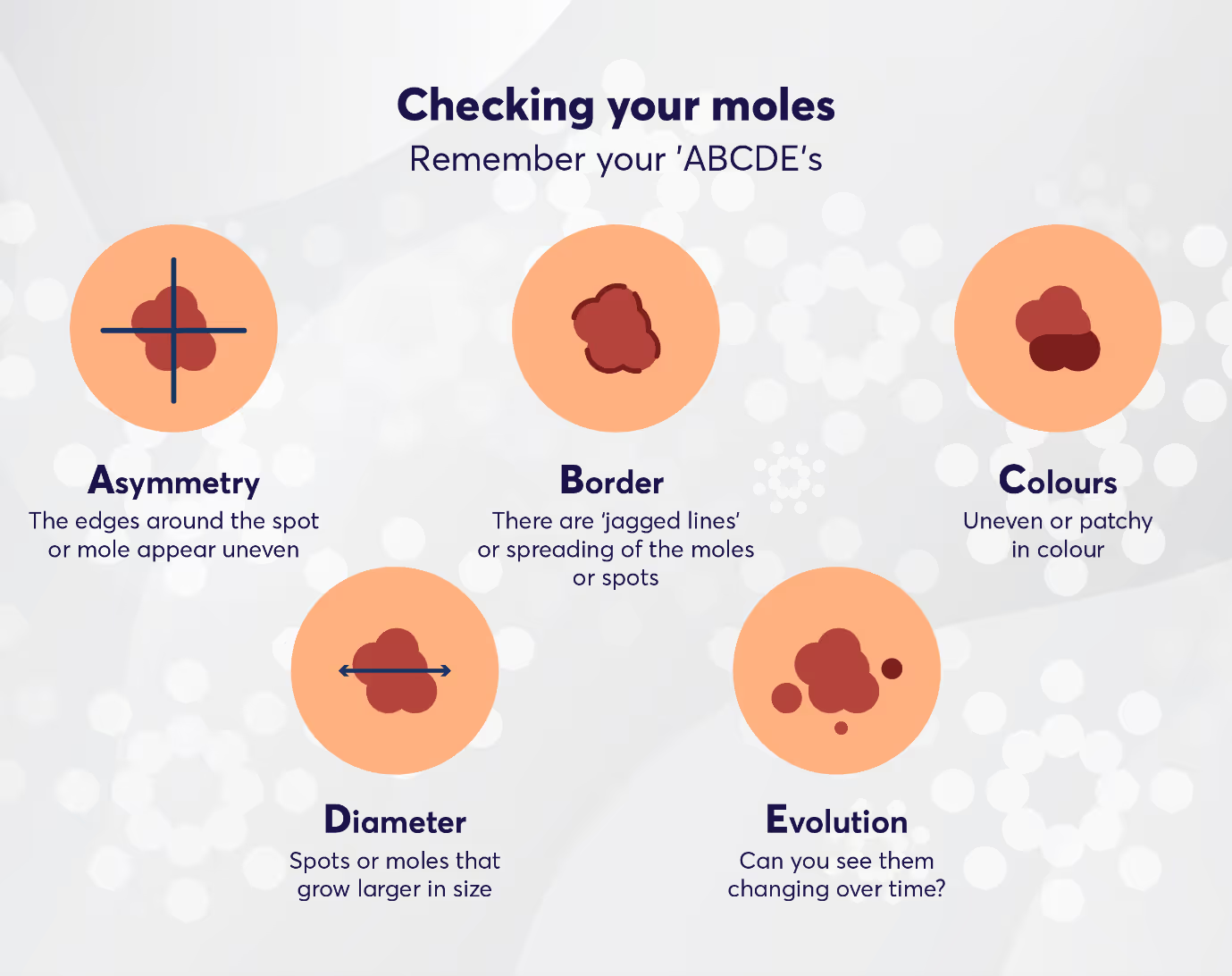
Melanoma is the most serious type of skin cancer. It can affect anyone, although people with fair skin, red or blonde hair or a history of sunburns may be at higher risk. During a skin check, melanoma may be identified through features such as asymmetry, irregular borders, uneven colour or changes in size. Some melanomas do not look obviously concerning, which is why regular checks are important.
2. Basal cell carcinoma (BCC)
BCC is the most common skin cancer in Australia. It often develops on sun-exposed areas like the face, ears, neck and arms. BCC may appear as a red bump, mole or sore that bleeds or does not heal properly.
3. Squamous cell carcinoma (SCC)
SCC is the second most common skin cancer and usually appears on sun-exposed areas, particularly in people over 50. It may present as a firm red, scaly patch or a small growth or sore that persists or bleeds.
What to Expect During Your SkinCheck+ Screening
Before your appointment, ensure your skin is clean and avoid wearing makeup.
You will meet a melanographer who will review your medical and family history, ask about your sun exposure and discuss whether you have noticed any recent changes to your skin.
You will be asked to undress to your underwear and wear a gown or drape for comfort. The melanographer will then examine your skin closely and photograph any features that need imaging. The process typically takes about an hour or less, depending on how many areas require assessment.
You will receive a dermatologist report within a few days and discuss your results with a specialist who can advise whether any findings need further medical review.
Who Should Get a Skin Cancer Check?
You can book a skin check even if you do not have noticeable skin problems. The test is non-invasive and helps you understand your current skin health.
Some factors may increase the likelihood of developing skin cancer. You may consider a skin check if you:
- Have red or blonde hair, fair skin or light-coloured eyes
- Have experienced severe or frequent sunburns
- Have more than 50 moles or have atypical moles
- Have a personal history of skin cancer or precancerous lesions
- Have a family history of melanoma or other skin cancers
- Spend significant time outdoors
- Use tanning beds
- Are over 50 years old
- Have a weakened immune system
- Notice new or changing spots on your skin
How Frequently Should You Get Your Skin Checked?
There is no single correct timing for skin checks. You can book one whenever you have concerns or simply want reassurance.
People with higher risk factors often choose to have a yearly check as a baseline for monitoring their skin. Some individuals with significant risk may choose more frequent checks, such as every few months, based on medical advice.
What Happens If Something Suspicious Is Found?
Finding something suspicious does not mean cancer. Many features turn out to be harmless, but a dermatologist may recommend further evaluation.
This can include:
A biopsy
A small tissue sample is removed under local anaesthetic and sent to a lab for analysis. This confirms whether the lesion is cancerous, precancerous or benign.
Next steps if a biopsy is positive
Treatment varies depending on the type of skin cancer and its stage. When detected early, many non-melanoma skin cancers can be removed with standard surgical excision. Melanoma may also be treated surgically, sometimes with wider excision or additional testing to check for spread.
Treatment for precancerous lesions
Options may include topical creams, cryotherapy (freezing) or simple removal to help prevent progression.
How to Do a Self-Examination at Home
Regular self-checks between professional screenings can help you notice changes early.
Use a well-lit room with a full-length mirror and a hand-held mirror for harder-to-see areas. Examine your entire body, including areas not usually exposed to the sun such as between your toes, the soles of your feet, under your nails, your scalp and your genital area.
Use the ABCDE rule when observing moles and watch for:
- Sores that do not heal
- New or unusual growths
- Rough or scaly patches
- Spots that look different from surrounding moles
If you notice anything concerning, speak with your GP or dermatologist. Everlab’s SkinCheck+ can support this process by providing detailed imaging and dermatologist review.
Prevention Tips to Lower Your Risk of Skin Cancer
UV radiation is a major cause of skin cancer. Protecting your skin can significantly reduce your risk.
You can:
- Apply broad-spectrum SPF 30+ sunscreen at least twenty minutes before going outdoors and reapply every two hours
- Wear sun-protective clothing, including wide-brimmed hats
- Choose darker-coloured clothing that absorbs more UV
- Wear wraparound sunglasses
- Seek shade during the hottest parts of the day, particularly 10 am to 2 pm (11 am to 3 pm in daylight savings)
Sources:
- Molemap: Skin Check
- Cancer Council, Australia: Checking for skin cancer
- HealthDirect: Should I be checked for skin cancer?
- Cancer Council, Australia: Finding skin cancer early
- ASMA: Melanoma vs. Non-Melanoma Skin Cancer: Key Differences and Treatments
Why should you get a comprehensive skin cancer check?
A comprehensive skin check helps identify changes that may need medical review before they become more serious. It gives you a clear picture of your skin health and supports early action when it matters most.
%402x%20(2).svg)


imaging
biomarkers
sterols
Book a Free Discovery Call
Join 20,000+ Australians improving their health with proactive, personalised healthcare.