
What is MCHC in a blood test? A guide to your red blood cells
MCHC is a primary blood marker that measures the concentration of haemoglobin within your red blood cells, serving as a critical indicator of how effectively your body transports oxygen to support physical and cognitive function. By monitoring MCHC alongside iron studies and other red cell indices, you can gain actionable insights into your nutritional status and identify early signs of imbalances before they impact your daily energy levels. Through a combination of comprehensive pathology and professional clinical review, understanding your MCHC allows for personalised dietary and lifestyle adjustments to maintain long-term metabolic health.

What:
MCHC Blood test
Tests for:
The concentration of haemoglobin within your red blood cells.
Referral:
Not Required
Member cost:
Part of larger blood panel
Red blood cells are important for your daily physical energy and cognitive function. They are responsible for carrying oxygen to every tissue, muscle, and organ in your body.
When looking at a blood test, MCHC (Mean Corpuscular Haemoglobin Concentration) is a metric that measures the concentration of haemoglobin inside your red blood cells. Haemoglobin is the key protein that transports oxygen. The standard reference range for MCHC in adults is 320 to 360 g/L, according to the Royal College of Pathologists of Australasia (RCPA).
By measuring this concentration, MCHC helps you understand your baseline cellular health and can inform decisions about your physical wellbeing.
How MCHC relates to your other blood markers
MCHC is part of a broader full blood count (FBC) test, a standard assessment widely used by Australian healthcare providers and recommended by authorities like Healthdirect to monitor general health.
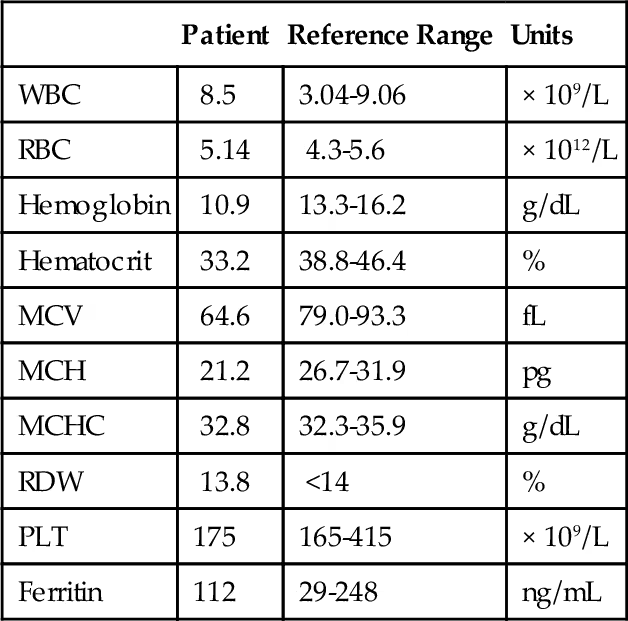
To get a more complete picture of your blood health, MCHC is reviewed alongside its companion markers. This combined view is helpful for understanding how your body creates and uses energy:
- Haemoglobin: A protein in red blood cells that carries oxygen. Levels indicate your body's oxygen-carrying capacity.
- Mean Corpuscular Haemoglobin (MCH): Measures the average amount of haemoglobin in a single red blood cell.
- Mean Corpuscular Volume (MCV): Measures the average size of your red blood cells.
- Haematocrit: Measures the percentage of red blood cells in your blood, which can reflect hydration and overall blood health.
- Red cell count: Measures the total number of red blood cells, relevant to diagnosing various blood conditions.
Understanding your MCHC results
Understanding your blood test results can help you make informed decisions about your daily routine. Here is a look at what different MCHC levels may indicate:
1. Within range (320-360 g/L)
Suggests that your red blood cells have a healthy concentration of haemoglobin for transporting oxygen. This supports healthy oxygenation and metabolic function.
2. Low MCHC (below 320 g/L)
This means your cells contain less haemoglobin than usual, which can be a useful indicator to check your iron status. Doctors often look at this alongside Serum Ferritin, which measures how much iron is stored in your body. Identifying a low MCHC early may help you manage your iron levels before significant fatigue develops (Hoffbrand and Steensma, 2019).
3. High MCHC (above 360 g/L)
This means your cells have a higher concentration of haemoglobin. This often prompts a closer look at the shape of your red cells or your hydration levels. It is an important marker that your doctor will review to ensure your blood cells are functioning and circulating efficiently.
Supporting your blood health
Knowing your MCHC can help inform your health decisions. With the right data, you can take informed actions to support healthy red blood cell production.
Nutritional intake plays a significant role in your blood health. Adjusting your diet helps ensure your body has the building blocks it needs, including iron and essential vitamins, to function well.
To support this, Everlab uses a Food Diary Analysis to track what you eat and drink, helping identify dietary patterns that may affect your results.
Monitoring over time is also valuable for long-term health awareness. Checking your MCHC alongside markers like Total Iron-Binding Capacity (TIBC) provides a broader picture of your metabolic health. TIBC measures how much iron your blood can carry, indicating whether your body is absorbing and distributing this key mineral effectively.
Everlab's Full Advanced Bloods package includes MCHC alongside a complete iron profile, vitamin assessment, and comprehensive metabolic panel.
How to test your MCHC with Everlab
Taking a closer look at your health data is straightforward:
- Comprehensive testing: An Everlab health check includes blood panels that measure your MCHC, alongside a complete iron profile and vitamin assessment.
- Consult your doctor: Everlab doctors interpret your data in context, reviewing your results alongside your overall health picture and medical history.
- Receive your report: Get a personalised health report with recommendations tailored to your results. This includes nutrition guidance and a consultation with a dietitian to receive advice on dietary adjustments suited to your needs.
References
- Royal College of Pathologists of Australasia (RCPA). Manual of Use and Interpretation of Pathology Tests.
- Healthdirect Australia. Blood test results explained.
- Hoffbrand AV, Steensma DP. Hoffbrand's Essential Haematology. 8th ed. Wiley-Blackwell; 2019.
Disclaimers
General information only: This article is for general informational purposes only and does not constitute medical advice, diagnosis, or treatment. Always consult a qualified healthcare professional for advice tailored to your individual circumstances.
Not a substitute for medical care: Biomarker testing through Everlab is intended to complement, not replace, care from your general practitioner or specialist. If you have symptoms or concerns, please see your doctor.
Results may vary: Individual biomarker levels are influenced by many factors including age, sex, medications, hydration, and recent illness. Results should always be interpreted by a qualified medical professional in the context of your full clinical picture.
Why should you get your MCHC blood test done?
Measuring your MCHC is essential for identifying whether your red blood cells have the appropriate concentration of haemoglobin to efficiently transport oxygen throughout your body. Monitoring this marker allows you to detect early nutritional deficiencies or changes in cellular health, enabling proactive adjustments to your diet and lifestyle to maintain optimal energy levels.
%402x%20(2).svg)


markers
consultation
roadmap
Book a Free Discovery Call
Join 20,000+ Australians improving their health with proactive, personalised healthcare.