
Mean Corpuscular Volume (MCV) Blood Test
When you get a full blood count (FBC) result, it’s common for your eyes to skip straight to the haemoglobin and overlook the rest of the report. One value that is often missed is the Mean Corpuscular Volume (MCV) blood test.

What:
Blood biomarker
Tests for:
Average size of your red blood cells and helps identify changes in red blood cell production.
Referral:
Required
Member cost:
Part of larger blood panel
The MCV blood test measures the average size of your red blood cells and can help identify changes in red blood cell production. In some cases, it may suggest nutrient deficiencies before noticeable symptoms appear. It can indicate certain types of anaemia, support the investigation of chronic disease, and provide insight into how well the bone marrow is functioning.
MCV is measured as part of the Everlab blood tests, alongside a comprehensive range of other clinically relevant markers. Your results are reviewed by a qualified clinician and brought together in a clear, easy-to-understand report, helping you gain deeper insight into your blood health and identify areas that may benefit from further discussion with your GP.
In this article, you’ll learn what the MCV blood test is, how it’s conducted, why it matters, and how results are commonly interpreted.
What Is the MCV Blood Test?
An MCV blood test measures the average volume of your red blood cells, expressed in femtolitres (fL). Red blood cells are responsible for carrying oxygen throughout the body, and their size can give clinicians useful information about how they are being produced.
Healthy red blood cells are relatively uniform in size and shape, which allows them to move efficiently through blood vessels. When the body lacks certain nutrients such as iron, vitamin B12, or folate, or when red blood cell production is affected by chronic disease or inherited blood disorders, red blood cell size may change. These changes are reflected in the MCV result.
MCV is measured as part of a Full Blood Count [FBC] (also known as a Complete Blood Count [CBC]). While the FBC assesses white blood cells, platelets, and red blood cells, MCV sits within the red blood cell indices, which describe the size and haemoglobin content of red blood cells.
Other red blood cell indices include MCH (mean corpuscular haemoglobin) and MCHC (mean corpuscular haemoglobin concentration). These values are closely related, but MCV often changes earlier because cell size can shift before other measures fall outside the reference range.
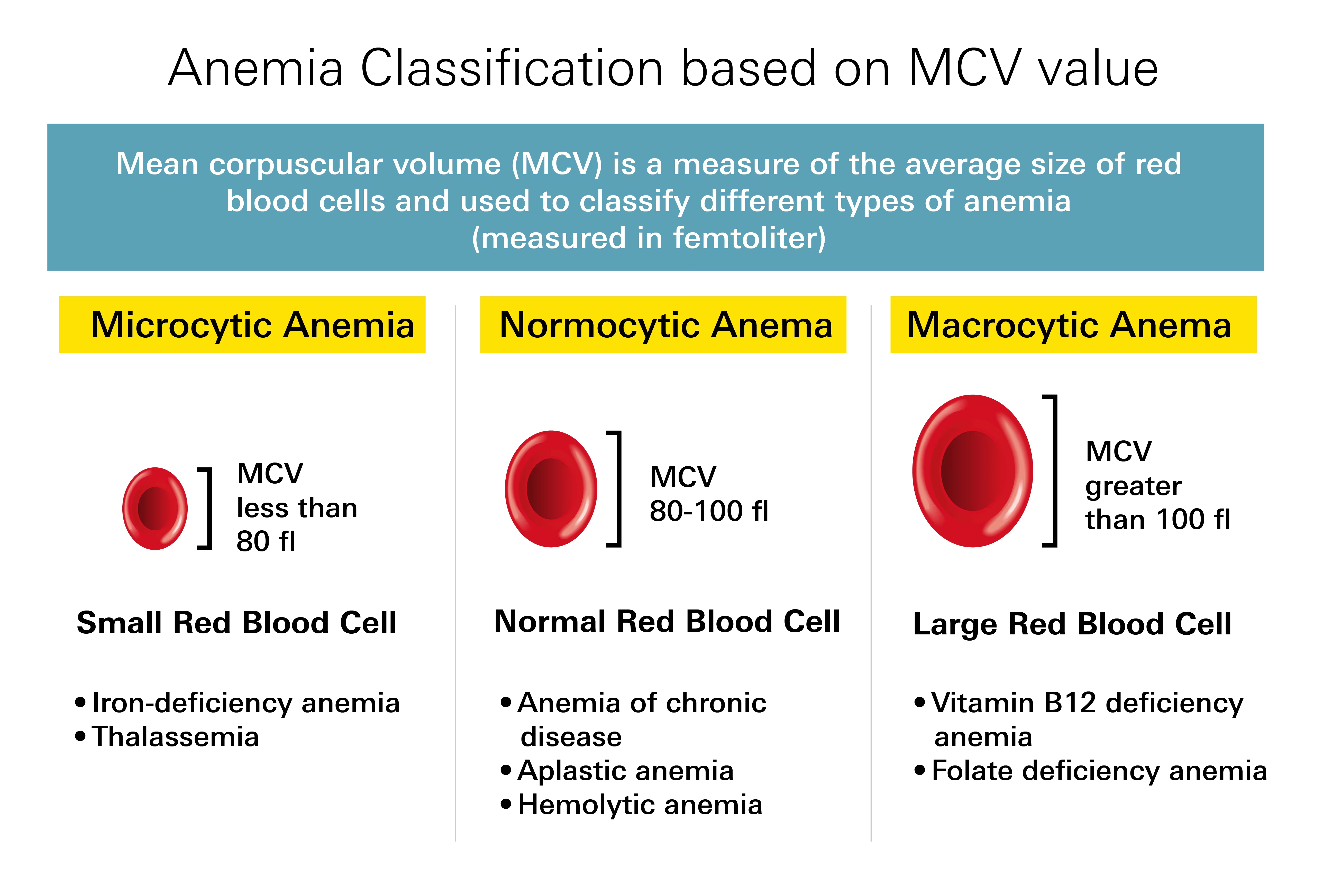
Reference ranges vary slightly between laboratories, but most healthy adults have an MCV of approximately 80 to 100 fL. Values below this range suggest smaller-than-expected red blood cells, while values above it suggest larger-than-expected cells. These differences can point to different underlying causes, which is why MCV is an important part of blood test interpretation.
Why Is the MCV Blood Test Important?
Red blood cells can reflect nutritional status, bone marrow health, and the effects of long-term illness. When oxygen delivery to tissues is affected by conditions such as iron deficiency, kidney disease, or chronic inflammation, changes in red blood cell characteristics may appear. The MCV can therefore provide an early clue that further investigation is needed.
A low MCV is commonly associated with microcytic anaemia, most often due to iron deficiency. In this situation, the body continues to produce red blood cells, but they are typically smaller and contain less haemoglobin. Lead exposure and certain inherited conditions can also cause microcytic anaemia.
A high MCV is commonly associated with macrocytic anaemia, often related to vitamin B12 or folate deficiency. These nutrients are required for normal red blood cell division, and when they are lacking, larger-than-normal red blood cells may be produced.
When MCV falls within the reference range but anaemia is present, this is known as normocytic anaemia. It may occur in situations such as acute blood loss, kidney disease, or bone marrow disorders.
MCV can also be considered alongside other results when evaluating conditions such as chronic kidney disease, liver disease, thalassaemias, sickle cell disease, and the effects of certain medications, including chemotherapy. Alcohol intake, untreated hypothyroidism, and bone marrow disorders may also influence MCV values.
Because many conditions can affect red blood cell size, MCV is often used as a starting point for further investigation rather than a diagnostic test on its own.
How Is the MCV Blood Test Conducted?
MCV is measured using a blood sample taken from a vein in the arm. The collection process usually takes only a few minutes. A healthcare professional applies a tourniquet, cleans the skin, and uses a small needle to collect blood into a vial. You may feel a brief scratch or sting as the needle enters the skin.
Once the sample is collected, the needle is removed and pressure is applied to the site to reduce bleeding. The blood sample is then sent to a laboratory for analysis.
Because MCV is part of the full blood count, it is reported alongside other red blood cell indices such as MCH and MCHC. Results are often available on the same day or within a few days, depending on the laboratory.
Do You Need to Fast or Prepare for an MCV Test?
No specific preparation is usually required. The full blood count does not require fasting, so you can eat and drink as normal unless other tests ordered at the same time require preparation. You will generally be informed in advance if fasting is needed.
What Does Low MCV Mean?
An MCV below 80 fL indicates that red blood cells are smaller than expected.
The most common cause of a low MCV is iron deficiency anaemia, as iron is essential for haemoglobin production. People with low MCV may experience symptoms such as fatigue, shortness of breath, dizziness, or pale skin, although symptoms can develop gradually.
Iron deficiency is not the only possible cause. Thalassaemia, an inherited condition affecting haemoglobin production, can also result in a very low MCV even when iron levels are normal.
When low MCV is identified, clinicians often request iron studies or ferritin testing. In some cases, further tests may be performed to assess for inherited blood disorders.
What Does High MCV Mean?
An MCV above 100 fL indicates that red blood cells are larger than usual, a finding known as macrocytosis. While larger cells might sound beneficial, this usually reflects a problem with red blood cell production rather than improved function.
Macrocytic anaemia is commonly associated with vitamin B12 or folate deficiency, as both are required for DNA synthesis during red blood cell development. When these nutrients are lacking, the bone marrow produces larger, less mature red blood cells.
A high MCV does not always indicate a vitamin deficiency. Other possible causes include liver disease, excessive alcohol intake, and certain medications such as chemotherapy.
Normal MCV Does Not Always Mean Everything Is Normal
It is possible to have anaemia with a normal MCV. This is known as normocytic anaemia and occurs when too few red blood cells are produced, even though the cells themselves are normal in size.
This can occur in:
- acute blood loss
- chronic kidney disease
- aplastic anaemia
- chronic inflammatory conditions
- early stages of some types of anaemia
Healthy kidneys produce erythropoietin, a hormone that stimulates red blood cell production. In chronic kidney disease, reduced erythropoietin levels can lead to normocytic anaemia even before other blood values become abnormal.
MCV in Chronic Conditions and Long-Term Health
Chronic conditions such as diabetes, long-standing inflammatory diseases, and chronic infections can influence how red blood cells are produced. These conditions may affect iron utilisation, vitamin absorption, or bone marrow activity.
For this reason, MCV can be helpful when monitoring chronic disease over time, particularly when considered alongside other blood markers and clinical information. Changes in MCV may reflect:
- progression of an illness
- response to treatment
- nutritional status
- underlying inflammation
- bone marrow function
Trends in MCV results are usually more meaningful than a single result and should always be interpreted in context.
The Bottom Line
The MCV blood test may seem like a small part of a blood report, but it provides useful insight into red blood cell health. By measuring the average size of red blood cells, it can help clinicians assess different types of anaemia and guide further investigation into nutrient status, chronic disease, and bone marrow function.
The Everlab program includes MCV testing alongside a broad range of other blood markers. Results are reviewed by a qualified clinician and reported in context. Any insights or recommendations provided are not a substitute for medical advice, and you should always discuss your results with your GP or treating healthcare professional.
Sources
- Mean Corpuscular Volume (MCV blood test)- Cleveland Clinic
- Mean corpuscular volume (MCV) levels: What is normal?- Medical news today
Why the MCV Bood Test Is Important
The MCV blood test is important because it helps assess the size of your red blood cells, which can provide early clues about different types of anaemia and underlying issues such as iron, vitamin B12, or folate deficiency. When interpreted alongside other blood results, it supports a more complete understanding of red blood cell health and whether further investigation may be needed.
%402x%20(2).svg)


markers
consultation
roadmap
Book a Free Discovery Call
Join 20,000+ Australians improving their health with proactive, personalised healthcare.