
Uric Acid Blood Test
Uric acid is a chemical substance produced in your body. The uric acid blood test measures the levels of uric acid in your blood. Uric acid is one of the indicators of the functioning of your kidneys and liver. The levels of uric acid are critical in health and disease, emphasising the usefulness of the uric acid blood test.
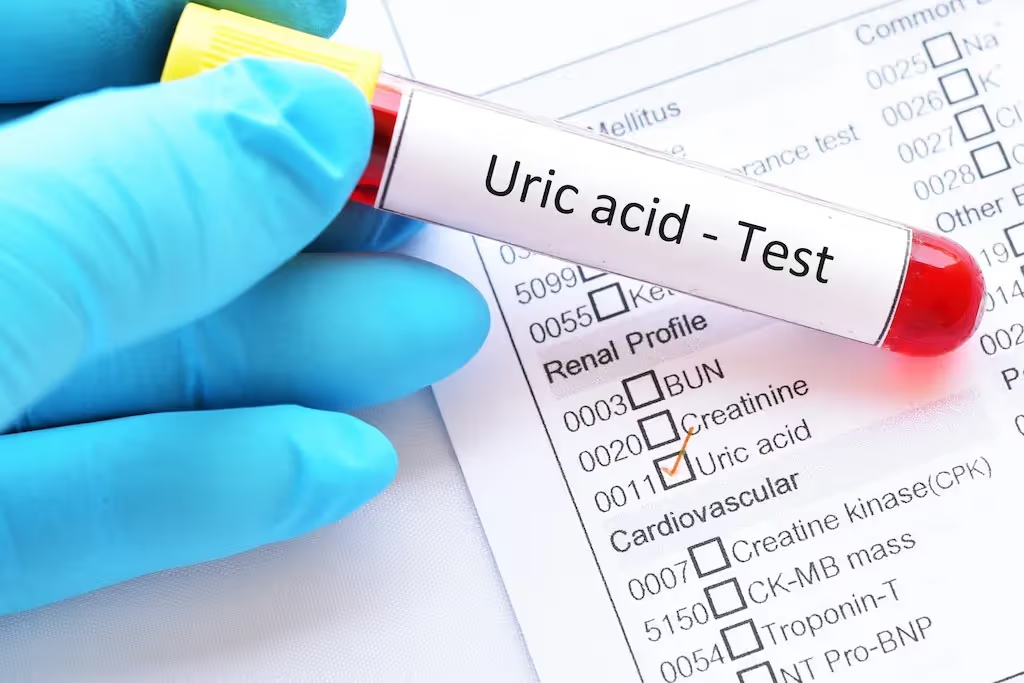
What:
Blood biomarker
Tests for:
Kidney health
Referral:
Required
Member cost:
Part of larger blood panel
What is a uric acid blood test?
Uric acid is a substance produced when your body breaks down purines - natural substances found in every cell and in most foods. A uric acid blood test estimates the levels of uric acid in your body.
Kidneys remove uric acid from your bloodstream as a waste product. However, uric acid has a complex role. It is protective in certain conditions, while it increases the risk of others. Blood uric acid is an antioxidant, and it protects your body from free radicals. It regulates blood pressure in the body and is a stimulator of the immune system. On the other hand, high levels of uric acid can cause conditions such as gout, kidney stones, and increase the risk of heart conditions, diabetes, and stroke.
Why is a Uric Acid blood test done?
A Uric Acid blood test is typically performed as part of Kidney Function Tests. Your doctor will recommend this test due to the following reasons:
- To review your overall health: As a component of a routine medical examination, and to monitor your general health.
- To diagnose gout: In case you have symptoms of gout, such as pain, redness, swelling, and stiffness of joints.
- To monitor the effects of treatment: In case you are being treated for gout, the levels of blood uric acid can indicate the effectiveness of the treatment.
- To monitor chemotherapy: Blood uric acid levels are monitored if you are having cancer chemotherapy or other cancer treatments. When treatment kills cancer cells quickly, they release large amounts of purines into the blood.
- To detect kidney stones: In case you are having symptoms of kidney stones, such as pain in the abdomen or flank, blood in urine, nausea, vomiting, or infection in the urine.
What conditions cause a change in the blood levels of Uric Acid?
High Uric Acid levels
High uric acid levels are referred to as hyperuricemia. High uric acid levels may be related to increased production of uric acid, decreased excretion of uric acid, and increased levels induced by medications.
Increased Uric Acid production
- Purine-rich diet: Purine-rich diet includes alcohol, particularly beer; meats such as bacon, beef, lamb, turkey, veal, venison, organ meats; and certain fish and shellfish including anchovies, sardines, herring, mussels, shrimp, lobster, codfish, scallops, trout, and haddock.
- Fructose: High-fructose corn syrup and sugary sodas are linked to obesity in children and adolescents and also increase the levels of blood uric acid. The increased production of uric acid occurs during the metabolism of fructose.
- Defective metabolism of purines: An error or defective functioning of the enzymes that metabolise purines increases the levels of blood uric acid.
- High cell turnover or destruction: Excessive cell breakdown can occur in conditions such as cancers, polycythemia vera or increase in the number of red blood cells, psoriasis, tumour lysis or breakdown of tumours, hemolysis or RBC destruction, rhabdomyolysis or muscle breakdown, extreme exercise, and chemotherapy.
Decreased Uric Acid excretion
Conditions causing a decrease in the uric acid excretion by the kidneys include:
- Acute or chronic kidney disease
- Reduction in blood volume due to blood loss or dehydration
- Acidosis or increased levels of acidity in the body which can occur as diabetic ketoacidosis
- Medication/toxins such as diuretics, niacin, pyrazinamide, ethambutol, cyclosporine, beryllium, salicylates, lead, alcohol
- Hypothyroidism (decreased thyroid hormone)
- Hyperparathyroidism (increased parathyroid hormone)
- Congenital conditions such as Bartter syndrome, Down syndrome
Medication use
- Diuretics such as thiazides and loop diuretics cause an increase in the levels of blood uric acid and increase the relative risk of gout by 80%.
- Other medications that can increase the levels of blood uric acid include aspirin, niacin or vitamin B3, levodopa, blood pressure medications such as beta blockers and angiotensin converting enzyme inhibitors.
Low Uric Acid levels
Low uric acid levels are referred to as hypouricemia. Conditions associated with low uric acid levels include:
- Rare inherited disorders that decrease uric acid production.
- Fanconi syndrome, which causes your kidneys to excrete too much uric acid and other substances.
- Neurological conditions such as Alzheimer’s disease, Parkinson’s disease and amyotrophic lateral sclerosis (ALS)
- Trigeminal neuralgia
- Diabetes
- Exercise-induced acute kidney injury
- Anti-gout drugs such as allopurinol
- Pregnancy
- Malnutrition
- A family history of hypouricemia
What conditions are associated with high levels of blood uric acid?
High levels of blood uric acid are quite common and do not cause symptoms right away. Uric acid levels can be elevated 10 to 15 years before clinical signs of gout appear. The global rise of hyperuricemia is due to the inclusion of the Western diet and lifestyle changes.
Gout
Gout is a metabolic disorder that involves an increase in the levels of blood uric acid and its accumulation in the blood and tissues. This causes the deposition of urate monohydrate crystals within a joint. Crystal build-up is increased in acidic and cold environments, which causes gout symptoms in peripheral joints, such as the big toe. Males are affected more than females, with a 4:1 ratio of men to women. Estrogen offers protection against hyperuricemia in women; however, women can develop hyperuricemia after menopause.
Kidney stones
During the formation of kidney stones, uric acid forms precipitates in the urine, most commonly due to acidic urine and metabolic syndrome. Factors such as acidic urine, decreased blood volume, and increased excretion of uric acid in urine increase the risk of uric acid kidney stones. Uric acid stones make up 5% to 10% of all urinary stones and can also contain calcium components.
Cardiovascular conditions
High blood uric acid levels are linked to high blood pressure, heart failure and metabolic syndrome. Metabolic syndrome includes three or more of these conditions: high blood pressure, high blood sugar, excess abdominal fat, and high cholesterol or triglyceride levels. Obesity provides an increased amount of free fatty acids to the liver, increasing uric acid production. This eventually raises the risk of heart disease, diabetes, and stroke.
Chronic kidney disease
Increased blood uric acid levels are associated with kidney disease and worse outcomes in chronic kidney disease.
How do you prepare for your Uric Acid blood test?
No special preparation is required for a uric acid blood test. However, tell your doctor if you are taking any medications or supplements that can affect your blood uric acid levels.
A blood uric acid test can be ordered alone or as a part of the Kidney Function Tests (KFT). You are not required to fast for this test; however, you may be required to fast for 8-12 hours, depending on other tests you may have scheduled. It is recommended to stay hydrated by drinking enough water when fasting. Your doctor will let you know if you need to follow any special instructions.
How is a Uric Acid blood test done?
The general steps of a blood test involve the following:
- A medical laboratory technician will check your arms for a vein that can be reached comfortably. This is usually in the inner part of your arm on the other side of your elbow
- Upon location of the vein, they would clean and disinfect the area
- They would then insert a small needle into your vein to draw a blood sample, which might feel like a slight pinch
- After they insert the needle, a small amount of blood will collect in a test tube
- They will remove the needle and press the bleeding site with a cotton ball or gauze to stop the bleeding
- A bandage will be applied on the site and the collection of the sample will be done
- After a healthcare provider has collected your blood sample, they’ll send it to a laboratory for testing. Once the test results are back, your doctor will share the results with you
Interpretation of test results


The normal reference range of blood uric acid for females is 0.15 mmol/L to 0.33 mmol/L and for males is 0.2-0.33 mmol/L.
Blood uric acid levels higher than the standard values in adults can produce symptoms or remain without symptoms. Several factors can influence the levels of uric acid in your body. Your doctor may repeat the test or recommend additional testing based on your signs and symptoms.
What can you do for elevated levels of blood Uric Acid?
The initial management for high levels of blood uric acid is based on dietary and lifestyle changes.
- Dietary changes: The key changes in diet involve restricting intake of purine-rich foods such as bacon, beef, lamb, turkey, veal, venison, organ meats; certain fish and shellfish including anchovies, sardines, herring, mussels, shrimp, lobster, codfish, scallops, trout, and haddock; and foods with high fructose content. Gout-supporting foods should be included in the diet, which consists of vegetables such as peas, mushrooms, dark leafy vegetables; legumes such as lentils, beans, soybeans, tofu; fruits such as cherries, berries; fish such as salmon, tuna; seafood; eggs; coffee; low fat dairy.
- Alcohol intake: Limit the intake of alcohol to no more than one drink per day for women and two drinks per day for men to prevent a rise in blood uric acid levels. Many alcoholic beverages, such as beer, particularly have high amounts of purines and must be restricted or reduced in amount to avoid a flare-up of gout.
- Water intake: Increase your water consumption to 7-8 glasses of water every day. Adequate water intake prevents the formation of uric acid stones due to high levels of blood uric acid.
- Exercise: Include aerobic exercises and resistance training.
- Weight loss: Your risk of developing gout increases if you are overweight or have high cholesterol. Therefore, making efforts to achieve a healthy weight through diet and exercise is essential for optimal levels of blood uric acid
- Smoking: Smoking increases the risk of cancer in the kidneys and urinary bladder. So, talk to your healthcare provider if you require help in quitting smoking.
- Stress management: Use mindfulness practices like meditation and yoga to decrease stress levels that ultimately affect various body functions.
- Environmental exposures: Exposure to environmental toxins such as lead, carbon monoxide, ozone has a risk to increase the levels of blood uric acid.
- Medications/natural supplements: Your doctor may also prescribe medications or natural supplements for liver support and protection.
Sources
1. Arthritis Foundation. High & Low Uric Acid Symptoms: How to Stay in a Safe Range. https://www.arthritis.org/diseases/more-about/high-low-uric-acid-symptoms-how-stay-in-safe-range
2. Institute for Natural Medicine. Natural remedies for treating gout. https://naturemed.org/natural-remedies-for-treating-gout/
3. George C, Leslie SW, Minter DA. Hyperuricemia. [Updated 2023 Oct 14]. In: StatPearls [Internet]. Treasure Island (FL): StatPearls Publishing; 2025 Jan-. Available from: https://www.ncbi.nlm.nih.gov/books/NBK459218/
4. Du L, Zong Y, Li H, Wang Q, Xie L, Yang B, Pang Y, Zhang C, Zhong Z, Gao J. Hyperuricemia and its related diseases: mechanisms and advances in therapy. Signal Transduct Target Ther. 2024 Aug 28;9(1):212. doi: 10.1038/s41392-024-01916-y. PMID: 39191722; PMCID: PMC11350024.
Get On Top Of My Uric Acid Levels
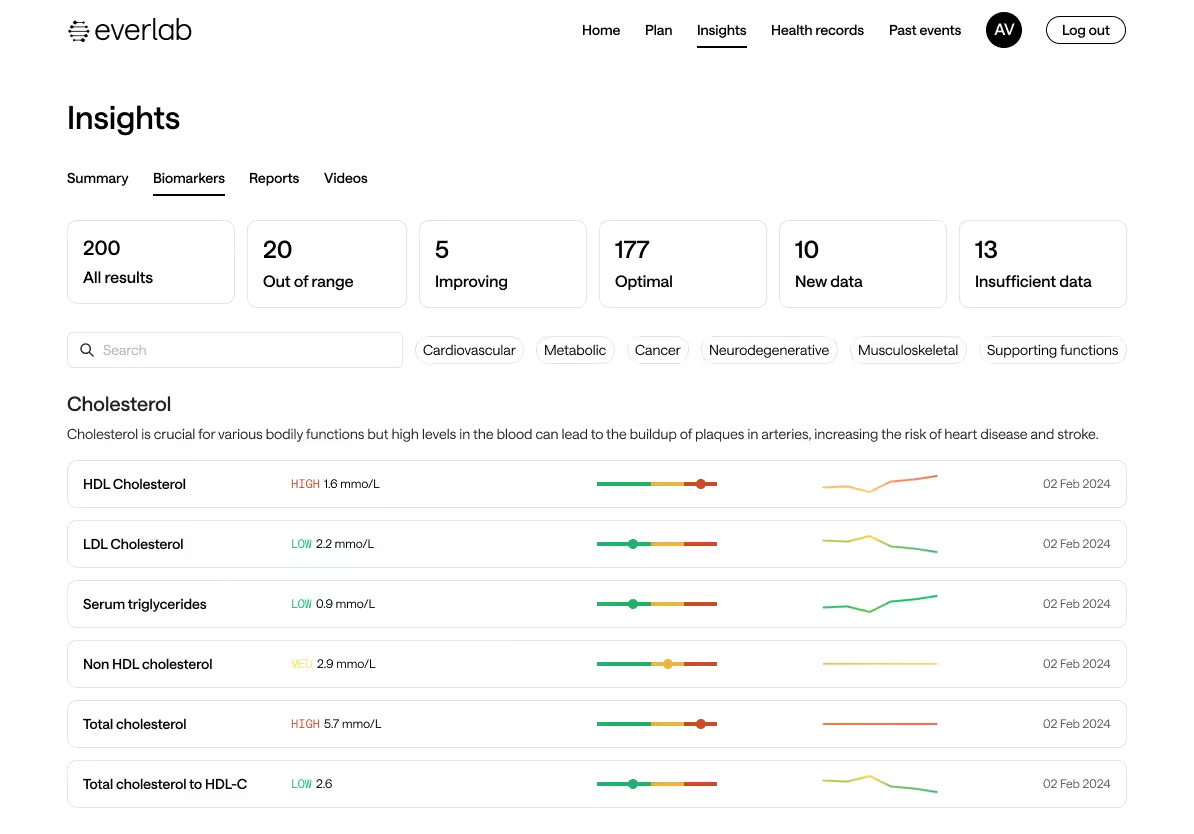
Uric acid is a valuable marker for understanding kidney health, gout risk, and broader metabolic function. Elevated levels may signal issues long before symptoms appear. At Everlab, we include uric acid testing as part of a deeper preventative assessment — giving you clear, actionable insights to manage inflammation, prevent complications, and stay ahead of chronic disease.
%402x%20(2).svg)


imaging
biomarkers
sterols
Book a Free Discovery Call
Join 20,000+ Australians improving their health with proactive, personalised healthcare.