
Basophils Absolute: Managing Allergies & Inflammation
The absolute basophil count is useful in monitoring inflammation and allergic responses. Unlike standard percentages, the absolute count provides a precise measurement of these "environmental sensors" to help identify low-grade triggers. By tracking these levels alongside a full immune panel, Everlab helps Australians develop individualised nutrition and lifestyle plans. While marginally high counts can signal underlying irritation, results must be interpreted by a qualified physician within standard clinical ranges ($0.0$ to $0.1$ x $10^9/L$) to ensure medical accuracy and regulatory compliance.

What:
Basophils Absolute
Tests for:
The total number of basophils (a specific type of white blood cell) in your bloodstream.
Referral:
Not required
Member cost:
Part of larger blood panel
Every minute of the day, your body is reading and reacting to the environment around you. Basophils are the specific white blood cells tasked with managing this relationship, particularly when it comes to airborne allergens, food sensitivities, and underlying inflammation.
Looking at your absolute basophil count moves us past simply checking for acute infections. It gives us a more detailed view of your current immune activity. With this cellular data, we can help explore potential environmental triggers, better understand physical reactivity, and support your everyday health.
What are basophils?
While they make up a tiny fraction of your overall white blood cell population, basophils play an important role in immune function.
Think of them as your body's environmental sensors. When you encounter a trigger like pollen, dust, or certain foods, these cells release histamine to respond to the interaction. Understanding their function shows how your body protects itself:
- Triggering allergic responses to isolate environmental irritants.
- Releasing histamine to increase local blood flow, allowing other immune cells to arrive faster.
- Contributing to immune memory to help the body process future exposures more efficiently.
Why measuring your absolute basophil count matters
Standard blood tests often report white blood cells as a percentage. While helpful, a percentage only shows a ratio. The "absolute" count delivers the exact number of basophil cells currently circulating in your bloodstream, providing a more detailed clinical picture.
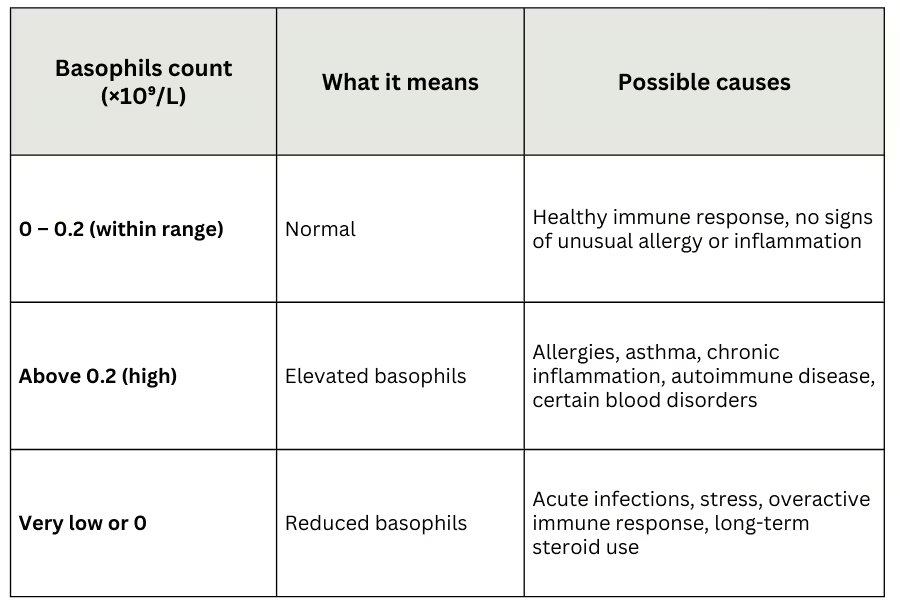
A marginally elevated absolute basophil count may point to low-grade inflammation that is not immediately obvious on a standard report. This can be a useful signal that your body is actively working to clear an irritant. By identifying what your immune system may be responding to, we can explore whether nutritional changes or environmental adjustments could help support your inflammatory load.
Understanding your complete white blood cell panel
Immune markers are interconnected. To properly assess your physical resilience, we review basophils alongside the rest of your immune panel. Your cell counts shift naturally depending on sleep quality, stress, and diet, which is why the Everlab clinical team reviews your results contextually.
Everlab Insight: Pathology reports typically flag results only when they fall outside the standard reference range. However, an absolute basophil count trending toward the upper limit of the range may warrant closer review. We look at these results in context to assess whether your immune system may be responding to an ongoing irritant.
How to check your immune health with Everlab
We believe your healthcare should be as detailed and individualised as your biology. Our process is built to give you greater clarity on your internal health.
- Book your screening: Schedule a comprehensive blood draw at a location that suits you.
- Consult your doctor: Meet with an Everlab physician via telehealth to review what your basophil and broader immune markers mean.
- Receive your plan: Walk away with a plan informed by your results, covering nutrition, environmental adjustments, and lifestyle habits relevant to your data.
References
- Royal College of Pathologists of Australasia (RCPA). Manual of Use and Interpretation of Pathology Tests.
- Healthdirect Australia. Blood count.
- Siracusa, M.C., Kim, B.S., Spergel, J.M., & Artis, D. (2013). Basophils and allergic inflammation. Journal of Allergy and Clinical Immunology, 132(4), 789-801. doi:10.1016/j.jaci.2013.07.046
Disclaimers
General information only. This article is intended for general informational purposes and does not constitute medical advice, diagnosis, or treatment. Always consult a qualified healthcare professional regarding any medical condition or health concerns.
Not a substitute for professional care. The information provided by Everlab is designed to support your understanding of your health data. It does not replace the advice, diagnosis, or treatment provided by your GP or specialist.
Individual results may vary. Biomarker reference ranges can differ between laboratories and are influenced by individual factors such as age, sex, hydration, and medication use. Your results should always be interpreted by a qualified medical practitioner in the context of your full medical history.
Why should you know the total number of basophils in your bloodstream?
Knowing your absolute basophil count provides a precise cellular baseline that percentages cannot offer. Because basophils are rare, percentages are easily skewed by other white blood cells, whereas the absolute count reveals the actual number of cells on patrol. This measurement is vital for detecting hidden inflammation and low-grade immune activation before symptoms appear. It also helps distinguish between temporary infections and persistent environmental sensitivities. Ultimately, this exact data acts as a biological receipt, allowing you to track whether lifestyle changes are effectively calming your immune system over time.
Additional FAQs
%402x%20(2).svg)


imaging
biomarkers
sterols
Book a Free Discovery Call
Join 20,000+ Australians improving their health with proactive, personalised healthcare.