
Albumin Blood Test In Australia
Normal albumin levels are important for your body to function effectively. For people who feel well and want to stay ahead of their health, an albumin blood test can flag subtle changes before symptoms appear. This supports longevity and preventative health by helping you understand potential risks early and make proactive lifestyle changes. It is a blood test that measures the level of albumin in your blood. This helps to determine the state of your liver, kidneys, and overall health, including whether you have normal albumin levels.

What:
Blood biomarker
Tests for:
Liver Health
Referral:
Not required
Member cost:
Part of the blood panel
In the blood plasma, albumin makes up more than half of the total protein and is produced by the liver.
This protein is abundant and can reflect your nutritional, liver, and kidney status, and even aspects of your digestive system. Albumin is important in:
- Maintaining fluid balance, including regulating blood volume
- Ensuring tissue repair throughout your body
- Supporting healthy growth of organs in your body
- Preventing fluid seepage from arteries, veins, and capillaries
- Transporting vitamins and enzymes throughout your body
- Transporting hormones and medications to and from target sites within the body
Normal albumin levels are essential for proper body function. Abnormal levels can be an indication of an underlying issue even before you start to notice symptoms.
Everlab’s advanced blood tests includes serum albumin testing as part of a broader assessment of liver, kidney, and nutritional health. Join the Everlab Program today and start building your complete health baseline.
How to Prepare for an Albumin Blood Test
Though the albumin blood test requires drawing your blood, there is no specific preparation required for the test.
You do not need to fast, abstain from food, or show up at a particular time of the day for the test to be done.
On the day of your appointment, your arm will be swabbed and a needle inserted to draw blood, just like a routine blood test.
The blood sample is then taken to the laboratory for analysis.
There may be mild pain at the site of the needle injection; it takes only a few minutes.
What Is the Normal Range of Blood Albumin in Adults?
Albumin is produced by the liver, and it is a good marker for assessing the status of the liver.
The normal albumin range in the blood (as shown on lab reports) is 3.5–5.5 grams per decilitre (g/dL) in adults. Levels above or below this can be indicative of an underlying cause.
Abnormal albumin levels in the blood require investigation to determine the cause and provide information necessary for an effective treatment plan.
Low Levels of Albumin in Your Blood
Low levels of serum albumin are known as hypoalbuminaemia and can suggest liver disease, kidney disease, or nutritional issues. Some of the liver diseases that can alter serum albumin levels are:
- Liver cirrhosis - A condition in which the synthesis of albumin is impaired due to the replacement of healthy tissues of the liver by scar tissue.
- Liver failure - The liver loses its function of producing proteins, including albumin, leading to low albumin levels in the blood. Hypoalbuminaemia in this case can be used to monitor the deterioration of the liver’s functional capacity.
- Hepatitis - Inflammation of the liver by toxins or infections, which impairs its ability to produce proteins such as albumin.
Conditions affecting the liver are not the only ones that can alter albumin levels. Other conditions outside of the liver and its functional capacity can also affect albumin levels — for example, kidney disease, low protein intake, and infections.
High Levels of Albumin in Your Blood
When the levels of blood albumin are higher than the upper limit, it is called hyperalbuminaemia.
Unlike hypoalbuminaemia, increased levels of serum albumin can result from a drop in the water level within the blood. This could be seen in:
- Severe dehydration and severe burns
- Diarrhoea
- Insulin and steroid intake
Depending on the cause, hyperalbuminaemia may require medical attention to assist with normalisation.
Know your numbers before symptoms appear. Subtle changes in albumin can signal early shifts in your liver or kidney function. Everlab helps you track these changes with ongoing data-driven insights and tailored health plans. Join the Everlab Program to take control of your long-term health.
Blood Albumin Levels in Pregnancy
Blood albumin levels in pregnant women are lower than in non-pregnant women. This decrease is often seen in the second and third trimester of pregnancy, with the normal albumin levels dropping to 2.8–3.5 g/dL in an otherwise healthy adult.
This is caused by dilution of blood plasma proteins and is physiological. Monitoring of maternal and foetal well-being with blood tests, including the albumin blood test, is essential in ensuring their well-being.
Who Can Get an Albumin Blood Test?
An albumin blood test can be requested for:
- Adults who are assessing their general health status to detect underlying health conditions
- Infants and children who could have symptoms suggestive of nutritional deficiencies, kidney or liver disease
- People on certain medications that may require review of albumin levels as part of a comprehensive review of health and medication response
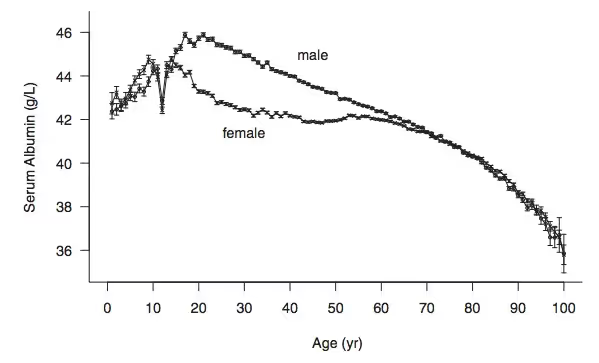
The values of albumin levels in children and infants differ from those of adults.
The normal reference range for children is 4.1–5.3 g/dL, while in newborns it is 3.6–5.6 g/dL; underlying conditions like protein-losing enteropathy can affect these values.
There are some symptoms that indicate a need for an albumin blood test. These include:
- Chronic tiredness and weakness
- Sunken eyes, loss of skin turgor, and jaundice
- Appetite loss and weight loss
- Abdominal or leg swellings
When the result of your albumin blood test is combined with the symptoms you are experiencing, it can provide your healthcare provider with information on the cause and how to manage it.
Are There Alternative Tests to the Albumin Blood Test?
Levels of albumin in the blood can give you information on the status of the liver, kidneys, your nutrition, and related health conditions.
It could be done as part of the liver function test and combined with other blood tests.
The liver function test would not only assess the capacity of the liver to produce albumin but also its overall function.
For a comprehensive assay of the proteins in your blood, your healthcare provider could also request a serum total protein test, which measures not only the albumin but also other proteins present within the blood.
In individuals with nutritional deficiencies, a prealbumin test can be requested; this gives information on the acute changes in protein metabolism.
Serum albumin is not to be confused with urine albumin (microalbumin), which detects albumin in the urine. It can be ordered with the blood albumin test to assess the overall health of both the liver and the kidneys.
What Can You Do to Improve Your Blood Albumin Levels?
Blood albumin levels can be supported by practising habits that promote good health and avoiding things that could be harmful to your liver, kidney function, and overall health. These include:
- Ensuring that you consume enough protein and a balanced diet
- Quitting smoking, heavy alcohol, and other substance use
- Ensuring that your vaccine status is up-to-date, especially hepatitis vaccines
- Not sharing needles or sharp objects
- Increasing daily fluid intake
Underlying medical conditions that may cause an increased or decreased blood albumin level should be managed by your doctor, who could also suggest lifestyle changes to keep your blood albumin levels healthy.
Not sure where to start? Book a personalised discovery call to discuss your goals and understand which blood tests are most relevant for you. Together, we’ll help you take the next step towards better health.
Conclusion
Albumin is a protein in the blood which helps in tissue repair, and its levels can give a good indication of the health status of the body through the albumin blood test.
Several underlying health problems which affect the liver, kidney, and nutritional status can cause a decrease or increase in albumin levels.
Prompt investigations and early guidance help you act before illness develops, supporting preventative care and long-term health.
Albumin Blood Test
An albumin blood test gives vital insight into how well your liver, kidneys, and overall metabolism are functioning, often revealing issues long before symptoms appear. It’s a simple test that helps detect early signs of disease, monitor nutrition, and guide personalised care to keep your body in optimal balance.
%402x%20(2).svg)


imaging
biomarkers
sterols
Book a Free Discovery Call
Join 20,000+ Australians improving their health with proactive, personalised healthcare.